Books for 5 Year Olds
Keep two choices separate: what a child wants to hear and what they can read for themselves. This guide puts picture-led read-alouds beside dialogue and early-reader books, then explains which features to check before using any title as independent reading practice.

A picture book can still be the richer choice
The Snail and the Whale connects travel, a change of scale and a rescue. Sam and Dave Dig a Hole asks the reader to see possibilities the characters miss. The Day the Crayons Quit lets different speakers explain their grievances. Those demands do not disappear when a child starts reading words independently. Keep picture books available for shared interpretation, rather than treating them as a stage that must be left behind.
Choose by the kind of story the child asks for, including characters they identify with. The protagonist’s gender can help locate a requested character; it is not a reason to divide the whole shelf into books a boy or a girl is expected to enjoy.
Short dialogue is not the same as a phonics sequence
Elephant & Piggie separates two voices clearly and can make taking turns convenient. A decodable series instead controls which letter–sound correspondences a beginning reader needs. Before handing over an apparently easy book, inspect a page: can the child work through its words using what they have actually learned, or are the pictures and repeated lines carrying most of the reading?
For phonics practice, match the actual book to the sequence used in teaching. Do not translate a publisher’s stage into an age guarantee or assume the same level number means the same thing across brands. Use the first-reading guide for a closer comparison of those choices.
Use a chapter book for a separate purpose
An adult-read chapter book introduces a story that continues across sessions. It does not need to replace a complete picture-book story, and it is not evidence that the child should decode that text alone. Choose a clear stopping point and briefly recall the previous incident before continuing. The chapter-book guide distinguishes short self-contained episodes from a continuous plot so you can choose the kind of continuation you want.
Compare every cover and read-aloud time
Open any book for its details, review and things worth knowing, right here. Read-aloud times are estimates for an unhurried pace, including time for page-turning and looking at pictures. How Owl and Page estimates read-aloud time.
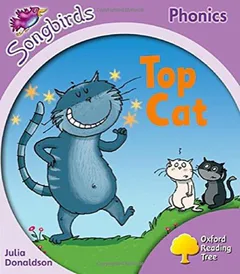 Oxford Reading Tree Songbirds Phonics: Level 1+: Top CatAges 4–6 · 1.5 min · about 55 wordsFull book page
- Estimated read-aloud time
- about 1.5 minutes
- Words
- 55approximate
- Sentences per spread
- 1
- Re-read tolerance
- 4/5good repeat appeal
- Vocabulary
- 1/5plain words
- Ages
- 4–6
Book features repeated refrain
Why it worksA constrained early code is embedded in a compact rhyming plot, so blending practice produces a complete reading event.
Worth knowingIt is not a first phonics lesson and becomes guessable after repetition; confirm the child is decoding rather than reciting.
Full book page Read Write Inc. Phonics: Sound Blending Book Bag Book 2Ages 4–6 · 2 min · about 40 wordsFull book page
- Estimated read-aloud time
- about 2 minutes
- Words
- 40approximate
- Sentences per spread
- 1
- Re-read tolerance
- 2/5a few readings
- Vocabulary
- 1/5plain words
- Ages
- 4–6
Book features repeated refrain · join-in questions
Why it worksA deliberately sparse one-word format concentrates practice on the difficult transition from separate phonemes to a blended word.
Worth knowingIt assumes correct Read Write Inc. sound pronunciation and offers almost no narrative; mismatched school terminology can confuse a beginner.
Full book page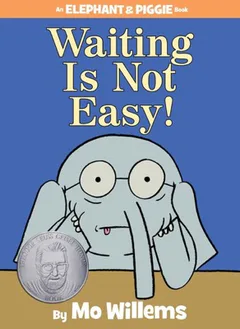 Waiting Is Not Easy!Ages 3–6 · 3 min · 197 wordsFull book page
- Estimated read-aloud time
- about 3 minutes
- Words
- 197
- Sentences per spread
- 1
- Re-read tolerance
- 5/5strong repeat appeal
- Vocabulary
- 1/5plain words
- Ages
- 3–6
Book features repeated refrain
Why it worksPiggie promises a surprise but will not reveal it early, and Gerald's repeated groans expand as daylight gives way to night. The final starry spread changes the pace and visual scale of the book, so the payoff depends on elapsed time rather than the escalating mishap used in There Is a Bird on Your Head!.
Worth knowingThe surprise is intentionally delayed until the closing night-sky scene. Readers wanting continuous action get repetition and anticipation instead.
Full book page Should I Share My Ice Cream?Ages 3–6 · 3.5 min · 245 wordsFull book page
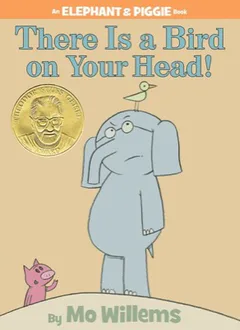 There Is a Bird on Your Head!Ages 3–6 · 3.5 min · 242 wordsFull book page
- Estimated read-aloud time
- about 3.5 minutes
- Words
- 242
- Sentences per spread
- 1
- Re-read tolerance
- 5/5strong repeat appeal
- Vocabulary
- 1/5plain words
- Ages
- 3–6
Book features repeated refrain
Why it worksGerald's problem grows visibly from one bird to two, then a nest and eggs, while Piggie's short replies keep the solution in dialogue. The color-coded speech bubbles also make the two roles easy to separate; Waiting Is Not Easy uses the same pair for an emotional time arc instead of an escalating physical predicament.
Worth knowingThe plot depends on Gerald not directly asking the birds to move until Piggie suggests it. Readers looking for a more independent problem-solving arc may prefer another Elephant & Piggie title.
Full book page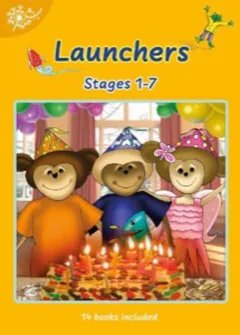 Phonic Books Dandelion Launchers Stages 1-7: Sam, Tam, Tim (Bindup)Ages 4–6 · 4 min · about 280 wordsFull book page
- Estimated read-aloud time
- about 4 minutes
- Words
- 280approximate
- Sentences per spread
- 1
- Re-read tolerance
- 2/5a few readings
- Vocabulary
- 1/5plain words
- Ages
- 4–6
Book features repeated refrain
Why it worksA tiny initial code and recurring CVC names let a beginner experience connected reading without hidden untaught spellings.
Worth knowingThe restricted vocabulary produces a functional, slight story, and the sequence must start at the child’s actual code level.
Full book page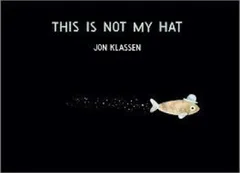 This Is Not My HatAges 3–6 · 4 min · 205 wordsFull book page
- Estimated read-aloud time
- about 4 minutes
- Words
- 205
- Sentences per spread
- 1
- Re-read tolerance
- 5/5strong repeat appeal
- Vocabulary
- 2/5everyday words
- Ages
- 3–6
Book features join-in questions
Why it worksAn unreliable monologue runs against visual evidence, requiring readers to build the true chase and infer the ending.
Worth knowingThe small fish likely faces lethal retaliation, and the ambiguity can be disturbing rather than funny for some readers.
Full book page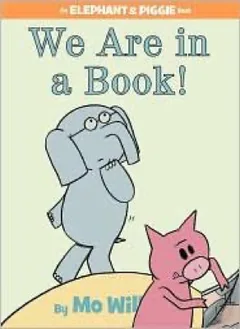 We Are in a Book!Ages 3–6 · 4 min · 256 wordsFull book page
- Estimated read-aloud time
- about 4 minutes
- Words
- 256
- Sentences per spread
- 1
- Re-read tolerance
- 5/5strong repeat appeal
- Vocabulary
- 1/5plain words
- Ages
- 3–6
Book features repeated refrain · join-in questions
Why it worksCharacters recognize the reader and page limit, turning book mechanics into both comedy and an emotional ending problem.
Worth knowingThe ending anxiety may concern children who dislike separation, and memorized audience cues are not the same as independent reading.
Full book page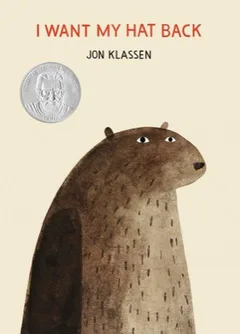 I Want My Hat BackAges 3–6 · 4.5 min · 253 wordsFull book page
- Estimated read-aloud time
- about 4.5 minutes
- Words
- 253
- Sentences per spread
- 1
- Re-read tolerance
- 5/5strong repeat appeal
- Vocabulary
- 2/5everyday words
- Ages
- 3–6
Book features repeated refrain · join-in questions
Why it worksThe pictures disclose the culprit before the protagonist knows, creating sustained dramatic irony and a morally ambiguous payoff.
Worth knowingThe ending strongly implies Bear ate Rabbit; adults should preview it for children sensitive to predation or punishment.
Full book page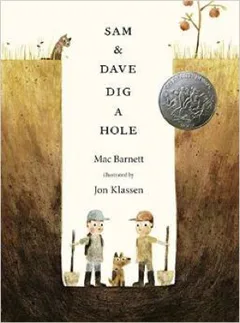 Sam & Dave Dig a HoleAges 3–6 · 4.5 min · 275 wordsFull book page
- Estimated read-aloud time
- about 4.5 minutes
- Words
- 275
- Sentences per spread
- 1
- Re-read tolerance
- 5/5strong repeat appeal
- Vocabulary
- 2/5everyday words
- Ages
- 3–6
Book features repeated refrain · join-in questions
Why it worksThe reader sees missed treasures and altered final details that the protagonists never acknowledge, making close observation the real discovery.
Worth knowingThe digging is unsafe to imitate, and the ambiguous ending offers no single confirmed explanation for where the boys arrive.
Full book page
See all 20 books
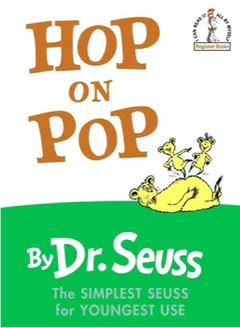 Hop on PopAges 3–5 · 5 min · 384 wordsFull book page
- Estimated read-aloud time
- about 5 minutes
- Words
- 384
- Sentences per spread
- 1
- Re-read tolerance
- 4/5good repeat appeal
- Vocabulary
- 1/5plain words
- Ages
- 3–5
Book features rhymes · join-in questions
Why it worksLarge-print word families are paired with short visual jokes, letting a beginning reader compare sounds and see a literal scene change when one letter changes. Independent spreads allow practice to stop without abandoning a plot.
Worth knowingSeveral lines are nonsense or deliberately rough slapstick, and the book does not teach a systematic phonics progression. Green Eggs and Ham uses the same limited-vocabulary discipline inside one sustained story.
Full book page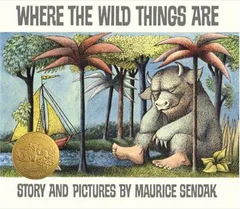 Where the Wild Things AreAges 3–6 · 5 min · 336 wordsFull book page
- Estimated read-aloud time
- about 5 minutes
- Words
- 336
- Sentences per spread
- 1
- Re-read tolerance
- 5/5strong repeat appeal
- Vocabulary
- 3/5a few new words
- Ages
- 3–6
Why it worksMax's bedroom grows into a forest after he is sent away, and the pictures expand until the wild rumpus occupies three wordless spreads. He leaves the monsters by choice when he wants to be loved, then finds his supper waiting and still hot.
Worth knowingThe monsters, punishment and threat to eat Max may unsettle younger listeners. When Sophie Gets Angry—Really, Really Angry... keeps its emotional journey in a recognizable home-and-nature setting; Max's version depends on fantasy and an unresolved parent-child conflict.
Full book page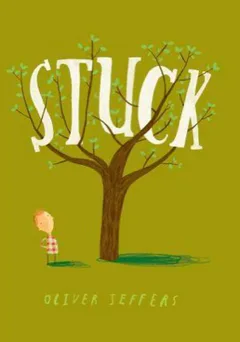 StuckAges 3–6 · 6.5 min · 493 wordsFull book page
- Estimated read-aloud time
- about 6.5 minutes
- Words
- 493
- Sentences per spread
- 2
- Re-read tolerance
- 5/5strong repeat appeal
- Vocabulary
- 2/5everyday words
- Ages
- 3–6
Book features repeated refrain · join-in questions
Why it worksFloyd throws progressively less plausible objects at a kite in a tree until shoes, animals, a whale and even firefighters are caught. The comedy depends on remembering the growing inventory and noticing that escalation never improves the method.
Worth knowingFloyd does not learn a careful problem-solving process, and the rescue workers also become part of the joke. Treat the book as absurd escalation rather than a model for getting objects down safely.
Full book page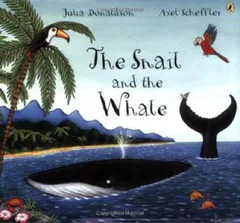 The Snail and the WhaleAges 4–6 · 8 min · 696 wordsFull book page
- Estimated read-aloud time
- about 8 minutes
- Words
- 696
- Sentences per spread
- 3
- Re-read tolerance
- 4/5good repeat appeal
- Vocabulary
- 4/5stretching
- Ages
- 4–6
Book features rhymes · repeated refrain
Why it worksThe snail chooses travel, sees contrasting landscapes from the whale's tail, then responds when the whale is stranded by writing a message for people at a school. The rescue reverses the apparent size imbalance: the smallest character supplies the actionable plan.
Worth knowingThe journey covers multiple settings before the beaching and rescue, so it is less refrain-driven than The Gruffalo. Stick Man also travels far from home, but his movement is forced and episodic rather than a chosen expedition.
Full book page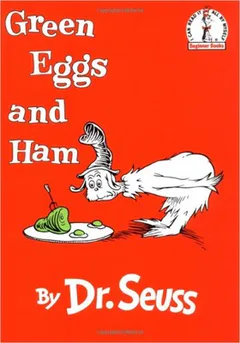 Green Eggs and HamAges 3–6 · 8.5 min · 769 wordsFull book page
- Estimated read-aloud time
- about 8.5 minutes
- Words
- 769
- Sentences per spread
- 2
- Re-read tolerance
- 5/5strong repeat appeal
- Vocabulary
- 1/5plain words
- Ages
- 3–6
Book features rhymes · repeated refrain · join-in questions
Why it worksSam-I-am varies place, company and transport while preserving the central refusal, turning a fifty-word vocabulary into an accumulating verbal structure. The eventual taste changes the answer and requires the long list to be reconsidered.
Worth knowingAt over 60 pages, this is a long read for its level. The constant repetition can be quite tiring for the adult reading it.
Full book page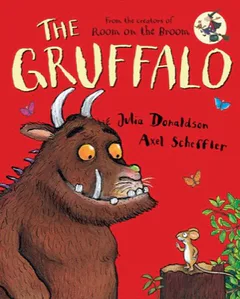 The GruffaloAges 3–6 · 8.5 min · 687 wordsFull book page
- Estimated read-aloud time
- about 8.5 minutes
- Words
- 687
- Sentences per spread
- 3
- Re-read tolerance
- 5/5strong repeat appeal
- Vocabulary
- 3/5a few new words
- Ages
- 3–6
Book features rhymes · repeated refrain · join-in questions
Why it worksThe mouse invents a monster to deter a fox, owl and snake, then meets that monster and reuses the same encounters as proof of his own supposed power. The repeated predator sequence first builds the lie, then lets the mouse reverse the danger through quick thinking.
Worth knowingThe story includes several animals intending to eat the mouse and a monster described through tusks, claws, jaws and a poisonous wart. Compared with Room on the Broom's cooperative group rescue, this is a solitary trickster story built around threat and deception.
Full book page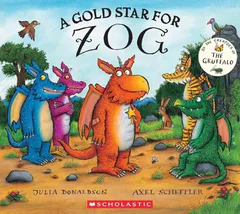 ZogAges 3–6 · 9.5 min · 812 wordsFull book page
- Estimated read-aloud time
- about 9.5 minutes
- Words
- 812
- Sentences per spread
- 3
- Re-read tolerance
- 4/5good repeat appeal
- Vocabulary
- 3/5a few new words
- Ages
- 3–6
Book features rhymes · repeated refrain · join-in questions
Why it worksMadam Dragon's curriculum moves through flying, roaring, fire-breathing and princess capture, with Zog's accidents and the girl's first aid recurring between tests. The final encounter changes the assignment: the princess wants to be a doctor, and Zog becomes transport for a flying medical team.
Worth knowingThe US edition is titled A Gold Star for Zog, while UK listings use Zog. Compared with Rocking in My School Shoes, this is a multi-year fantasy curriculum and career reversal rather than a tour of one ordinary school day.
Full book page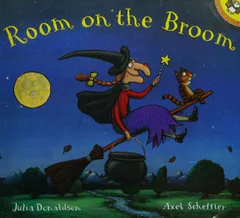 Room on the BroomAges 3–6 · 10 min · 834 wordsFull book page
- Estimated read-aloud time
- about 10 minutes
- Words
- 834
- Sentences per spread
- 3
- Re-read tolerance
- 5/5strong repeat appeal
- Vocabulary
- 3/5a few new words
- Ages
- 3–6
Book features rhymes · repeated refrain · join-in questions
Why it worksThe witch repeatedly makes room for a dog, bird and frog after each animal retrieves something she has lost. Their additions first overload the broom, then make the later dragon rescue possible, linking generosity to a concrete return rather than a general friendship message.
Worth knowingThe broom snaps and a dragon threatens to eat the witch. Unlike The Gruffalo's solitary bluff, the solution depends on the animals combining into one frightening shape.
Full book page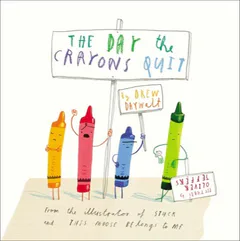 The Day the Crayons QuitAges 4–8 · 11 min · 999 wordsFull book page
- Estimated read-aloud time
- about 11 minutes
- Words
- 999
- Sentences per spread
- 4
- Re-read tolerance
- 5/5strong repeat appeal
- Vocabulary
- 3/5a few new words
- Ages
- 4–8
Why it worksDuncan receives separate letters from crayons objecting to overuse, neglect, outlines and disputed color roles. The document structure makes each complaint a distinct point of view before his final drawing answers them collectively.
Worth knowingThe many letters make this longer than a simple color book, and several jokes rely on understanding conventional coloring rules. It is easy to split across sittings, but the final response works best after enough complaints are known.
Full book page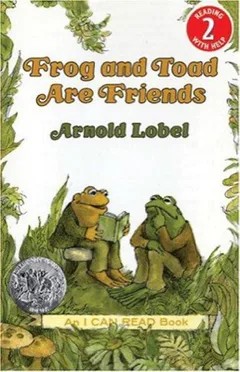 Frog and Toad Are FriendsAges 4–6 · 22 min · 2,281 wordsFull book page
- Estimated read-aloud time
- about 22 minutes
- Words
- 2,281
- Sentences per spread
- 3
- Re-read tolerance
- 4/5good repeat appeal
- Vocabulary
- 2/5everyday words
- Ages
- 4–6
Why it worksFive self-contained stories let a new reader complete a chapter-sized arc, while Frog and Toad's contrasting temperaments carry continuity across waking, searching, waiting and storytelling episodes.
Worth knowingThe quiet pacing is deliberately less joke-dense than Elephant & Piggie, and the whole volume is long for one sitting. Henry and Mudge offers similarly gentle early chapters with a child-and-dog relationship rather than two equal friends.
Full book page