
Potty Training Books
Potty books serve several different purposes: naming what happens, showing a familiar routine, making an accident ordinary or adding a joke. Choose the purpose that matches the conversation. A story is a way to talk about the process, not a timetable for a child or a promise of training success.


Our top picks
 PottyAges 2–3 · 2.5 min · about 100 wordsFull book page
- Estimated read-aloud time
- about 2.5 minutes
- Words
- 100approximate
- Sentences per spread
- 1
- Re-read tolerance
- 4/5good repeat appeal
- Vocabulary
- 1/5plain words
- Ages
- 2–3
Book features repeated refrain · join-in questions
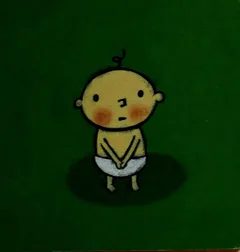
Why it worksBaby notices the bodily signal, considers a diaper and the potty, waits, has a false start and finally succeeds. Very short labels keep attention on the physical sequence and Baby's own decision.
Worth knowingThe minimal text does not teach wiping, flushing or handwashing. Time to Pee! supplies a fuller procedural checklist; Potty is better for naming readiness, waiting and the first success.
Full book page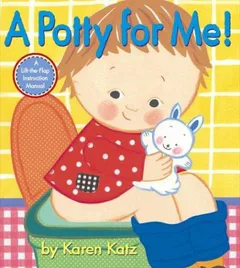 A Potty for Me!Ages 2–3 · 4 min · about 120 wordsFull book page
- Estimated read-aloud time
- about 4 minutes
- Words
- 120approximate
- Sentences per spread
- 1
- Re-read tolerance
- 3/5holds up
- Vocabulary
- 1/5plain words
- Ages
- 2–3
Book features repeated refrain · join-in questions
Why it worksA first-person child alternates play, meals, sleep, accidents and repeated sits before reaching success. Lift-up flaps make the attempts and outcome something the reader reveals rather than a lecture delivered from outside.
Worth knowingBecause the paper flaps are fragile, they won't last long if the book is kept in a bathroom near the floor.
Full book page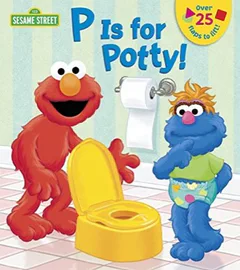 P is for Potty!Ages 2–3 · 4 min · about 150 wordsFull book page
- Estimated read-aloud time
- about 4 minutes
- Words
- 150approximate
- Sentences per spread
- 1
- Re-read tolerance
- 3/5holds up
- Vocabulary
- 1/5plain words
- Ages
- 2–3
Book features repeated refrain · join-in questions
Why it worksElmo guides his younger cousin Albie through toilet learning while more than thirty flaps conceal questions, objects and small outcomes. The Sesame Street relationship gives the instruction a familiar peer-like guide.
Worth knowingThis book is really only effective if your child is already a fan of Elmo.
Full book page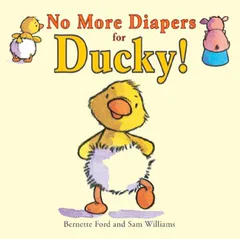 No More Diapers for Ducky!Ages 2–3 · 3.5 min · 187 wordsFull book page
- Estimated read-aloud time
- about 3.5 minutes
- Words
- 187
- Sentences per spread
- 1
- Re-read tolerance
- 4/5good repeat appeal
- Vocabulary
- 1/5plain words
- Ages
- 2–3
Book features repeated refrain · join-in questions
Why it worksDucky notices Piggy using the potty, recognizes her own wet diaper and decides to imitate a friend, making social observation rather than adult pressure the trigger for trying.
Worth knowingThe quick change may imply that readiness arrives after one example. A Potty for Me! gives more room to refusal, an accident and repeated attempts.
Full book page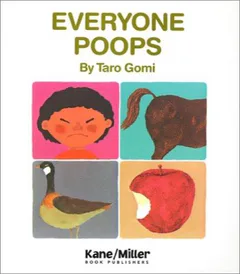 Everyone PoopsAges 2–4 · 3.5 min · about 142 wordsFull book page
- Estimated read-aloud time
- about 3.5 minutes
- Words
- 142approximate
- Sentences per spread
- 1
- Re-read tolerance
- 3/5holds up
- Vocabulary
- 2/5everyday words
- Ages
- 2–4
Book features repeated refrain · join-in questions
Why it worksAnimals of different sizes and habits establish elimination as a biological constant before the book turns to adults, children, babies and toilets. The direct pictures remove euphemism and separate privacy or toilet learning from shame.
Worth knowingThe drawings explicitly show feces and bodies, which some families may prefer to preview. Potty follows one child's decision and attempts; Everyone Poops is broader normalization rather than a step-by-step training story.
Full book page
Choose between explanation and a character story
Everyone Poops places bodily functions in a wider animal-and-human context. Potty follows a young character’s immediate decision. A Potty for Me! presents the subject through a rhyming child-centered routine. Pick a broad explanation when the question is what bodies do, or a character story when the child wants to see someone encountering the object and process.
P Is for Potty uses Sesame Street characters and a flap format. That familiar cast and reveal mechanism are reasons to choose its actual edition, not evidence that it teaches a different developmental method.
Check the language and the depicted equipment
Read the terms used for bodies, clothing and toileting before choosing a book to repeat often. Once Upon a Potty is sold in different character editions; verify which version you intend. A depicted potty, toilet or clothing routine may differ from the one your family uses. Explain that difference directly rather than forcing your routine to match a story.
Time to Pee and Dinosaur vs. the Potty use very different visual and comic devices. Compare their individual notes if you want humor, particularly whether the joke is about noticing a need, resisting an interruption or behaving triumphantly.
Keep the book’s role modest and useful
Read at a neutral moment if that makes the subject easier to discuss. Let the book supply a name, a pictured sequence or a question; do not use its ending as evidence that an accident or difficulty should already be resolved. If the concern is pain or another health issue, an illustrated story cannot answer it. Keep the reading choice separate from decisions that need individualized professional guidance.
Compare every cover and read-aloud time
Open any book for its details, review and things worth knowing, right here. Read-aloud times are estimates for an unhurried pace, including time for page-turning and looking at pictures. How Owl and Page estimates read-aloud time.
- PottyAges 2–3 · 2.5 min · about 100 wordsFull book page
- Estimated read-aloud time
- about 2.5 minutes
- Words
- 100approximate
- Sentences per spread
- 1
- Re-read tolerance
- 4/5good repeat appeal
- Vocabulary
- 1/5plain words
- Ages
- 2–3
Book features repeated refrain · join-in questions
Why it worksBaby notices the bodily signal, considers a diaper and the potty, waits, has a false start and finally succeeds. Very short labels keep attention on the physical sequence and Baby's own decision.
Worth knowingThe minimal text does not teach wiping, flushing or handwashing. Time to Pee! supplies a fuller procedural checklist; Potty is better for naming readiness, waiting and the first success.
Full book page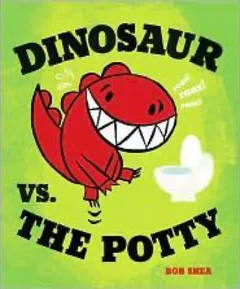 Dinosaur vs. the PottyAges 2–4 · 3.5 min · about 150 wordsFull book page
- Estimated read-aloud time
- about 3.5 minutes
- Words
- 150approximate
- Sentences per spread
- 1
- Re-read tolerance
- 4/5good repeat appeal
- Vocabulary
- 1/5plain words
- Ages
- 2–4
Book features repeated refrain · join-in questions
Why it worksDinosaur declares victory after lemonade, sprinkler play, juice and a pool, even as the repeated drinks make the eventual need increasingly obvious. The victory chant lets a listener join the defiance before the final reversal.
Worth knowingThe comedy depends on prolonged holding and does not model a calm toilet routine. Potty is the quieter alternative for noticing the signal and trying; Dinosaur is for laughing at denial.
Full book page- Everyone PoopsAges 2–4 · 3.5 min · about 142 wordsFull book page
- Estimated read-aloud time
- about 3.5 minutes
- Words
- 142approximate
- Sentences per spread
- 1
- Re-read tolerance
- 3/5holds up
- Vocabulary
- 2/5everyday words
- Ages
- 2–4
Book features repeated refrain · join-in questions
Why it worksAnimals of different sizes and habits establish elimination as a biological constant before the book turns to adults, children, babies and toilets. The direct pictures remove euphemism and separate privacy or toilet learning from shame.
Worth knowingThe drawings explicitly show feces and bodies, which some families may prefer to preview. Potty follows one child's decision and attempts; Everyone Poops is broader normalization rather than a step-by-step training story.
Full book page- No More Diapers for Ducky!Ages 2–3 · 3.5 min · 187 wordsFull book page
- Estimated read-aloud time
- about 3.5 minutes
- Words
- 187
- Sentences per spread
- 1
- Re-read tolerance
- 4/5good repeat appeal
- Vocabulary
- 1/5plain words
- Ages
- 2–3
Book features repeated refrain · join-in questions
Why it worksDucky notices Piggy using the potty, recognizes her own wet diaper and decides to imitate a friend, making social observation rather than adult pressure the trigger for trying.
Worth knowingThe quick change may imply that readiness arrives after one example. A Potty for Me! gives more room to refusal, an accident and repeated attempts.
Full book page- A Potty for Me!Ages 2–3 · 4 min · about 120 wordsFull book page
- Estimated read-aloud time
- about 4 minutes
- Words
- 120approximate
- Sentences per spread
- 1
- Re-read tolerance
- 3/5holds up
- Vocabulary
- 1/5plain words
- Ages
- 2–3
Book features repeated refrain · join-in questions
Why it worksA first-person child alternates play, meals, sleep, accidents and repeated sits before reaching success. Lift-up flaps make the attempts and outcome something the reader reveals rather than a lecture delivered from outside.
Worth knowingBecause the paper flaps are fragile, they won't last long if the book is kept in a bathroom near the floor.
Full book page- P is for Potty!Ages 2–3 · 4 min · about 150 wordsFull book page
- Estimated read-aloud time
- about 4 minutes
- Words
- 150approximate
- Sentences per spread
- 1
- Re-read tolerance
- 3/5holds up
- Vocabulary
- 1/5plain words
- Ages
- 2–3
Book features repeated refrain · join-in questions
Why it worksElmo guides his younger cousin Albie through toilet learning while more than thirty flaps conceal questions, objects and small outcomes. The Sesame Street relationship gives the instruction a familiar peer-like guide.
Worth knowingThis book is really only effective if your child is already a fan of Elmo.
Full book page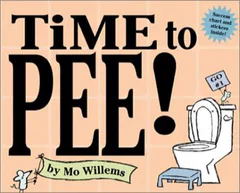 Time to Pee!Ages 2–4 · 4 min · about 250 wordsFull book page
- Estimated read-aloud time
- about 4 minutes
- Words
- 250approximate
- Sentences per spread
- 1
- Re-read tolerance
- 3/5holds up
- Vocabulary
- 2/5everyday words
- Ages
- 2–4
Book features repeated refrain
Why it worksSign-carrying mice announce the body signal and guide the child through stopping play, reaching the toilet, undressing, using it, wiping, dressing, flushing and washing. The visual coaches turn a private routine into a readable sequence.
Worth knowingSince this is designed as an instructional tool, it likely won't see much use once a child is fully potty trained.
Full book page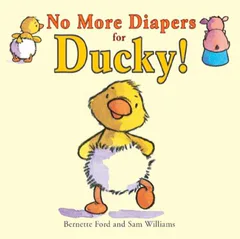 Once Upon a PottyAges 2–4 · 6 min · about 450 wordsFull book page
- Estimated read-aloud time
- about 6 minutes
- Words
- 450approximate
- Sentences per spread
- 2
- Re-read tolerance
- 3/5holds up
- Vocabulary
- 2/5everyday words
- Ages
- 2–4
Book features repeated refrain
Why it worksThe anatomically explicit narrator identifies body parts, the potty, waiting, accidents and eventual success in a direct sequence originally created to explain toilet learning to a young child.
Worth knowingBoy and girl editions use binary, dated language and illustrations that families may need to adapt. Potty offers a shorter, less anatomical inner monologue.
Full book page