
Books Like The Gruffalo
The Gruffalo combines rhyme, repeated encounters, threats and a trickster’s reversal. An alternative can keep the rhythm while changing the emotional route or the way the problem is solved. Choose which of those features you want to repeat and which you would rather change.


Our top picks
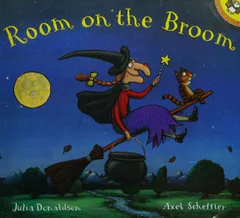 Room on the BroomAges 3–6 · 10 min · 834 wordsFull book page
- Estimated read-aloud time
- about 10 minutes
- Words
- 834
- Sentences per spread
- 3
- Re-read tolerance
- 5/5strong repeat appeal
- Vocabulary
- 3/5a few new words
- Ages
- 3–6
Book features rhymes · repeated refrain · join-in questions
Why it worksThe witch repeatedly makes room for a dog, bird and frog after each animal retrieves something she has lost. Their additions first overload the broom, then make the later dragon rescue possible, linking generosity to a concrete return rather than a general friendship message.
Worth knowingThe broom snaps and a dragon threatens to eat the witch. Unlike The Gruffalo's solitary bluff, the solution depends on the animals combining into one frightening shape.
Full book page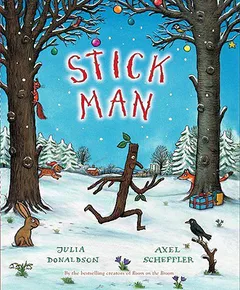 Stick ManAges 3–6 · 9 min · 731 wordsFull book page
- Estimated read-aloud time
- about 9 minutes
- Words
- 731
- Sentences per spread
- 3
- Re-read tolerance
- 4/5good repeat appeal
- Vocabulary
- 3/5a few new words
- Ages
- 3–6
Book features rhymes · repeated refrain · join-in questions
Why it worksEach new character mistakes Stick Man for an object—a fetch stick, flag mast, sword, hook or firewood—while his repeated self-description keeps his identity and family goal visible. The changing seasons give the accidental journey a clear duration before Santa provides the route home.
Worth knowingSeparation from his family occupies most of the story, and the final mistaken use puts him beside a lit fireplace. The Snail and the Whale is a better counterpart when the desired journey is chosen rather than imposed.
Full book page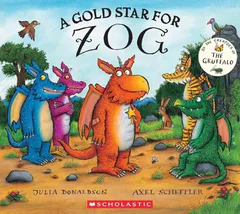 ZogAges 3–6 · 9.5 min · 812 wordsFull book page
- Estimated read-aloud time
- about 9.5 minutes
- Words
- 812
- Sentences per spread
- 3
- Re-read tolerance
- 4/5good repeat appeal
- Vocabulary
- 3/5a few new words
- Ages
- 3–6
Book features rhymes · repeated refrain · join-in questions
Why it worksMadam Dragon's curriculum moves through flying, roaring, fire-breathing and princess capture, with Zog's accidents and the girl's first aid recurring between tests. The final encounter changes the assignment: the princess wants to be a doctor, and Zog becomes transport for a flying medical team.
Worth knowingThe US edition is titled A Gold Star for Zog, while UK listings use Zog. Compared with Rocking in My School Shoes, this is a multi-year fantasy curriculum and career reversal rather than a tour of one ordinary school day.
Full book page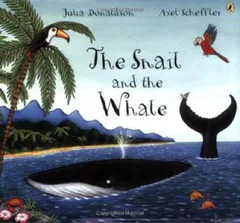 The Snail and the WhaleAges 4–6 · 8 min · 696 wordsFull book page
- Estimated read-aloud time
- about 8 minutes
- Words
- 696
- Sentences per spread
- 3
- Re-read tolerance
- 4/5good repeat appeal
- Vocabulary
- 4/5stretching
- Ages
- 4–6
Book features rhymes · repeated refrain
Why it worksThe snail chooses travel, sees contrasting landscapes from the whale's tail, then responds when the whale is stranded by writing a message for people at a school. The rescue reverses the apparent size imbalance: the smallest character supplies the actionable plan.
Worth knowingThe journey covers multiple settings before the beaching and rescue, so it is less refrain-driven than The Gruffalo. Stick Man also travels far from home, but his movement is forced and episodic rather than a chosen expedition.
Full book page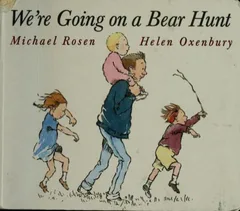 We're Going on a Bear HuntAges 2–5 · 6 min · 410 wordsFull book page
- Estimated read-aloud time
- about 6 minutes
- Words
- 410
- Sentences per spread
- 2
- Re-read tolerance
- 5/5strong repeat appeal
- Vocabulary
- 2/5everyday words
- Ages
- 2–5
Book features repeated refrain · join-in questions
Why it worksThe family crosses grass, river, mud, forest and snowstorm through repeated obstacle language and distinct sound phrases, then reverses the entire route at speed after finding the bear. Movement and memory are built into the same structure.
Worth knowingThe encounter and chase can frighten sensitive listeners, and the energetic return is poorly suited to a final calming read. The Gruffalo uses repeated landscape encounters with verbal problem solving rather than physical escape.
Full book page
Keep the rhyme and change the solution
Room on the Broom turns an accumulating group into a cooperative rescue. Zog uses repeated stages of schooling and changes the roles expected of its characters. The Snail and the Whale makes a difference in scale part of a rescue. These retain Julia Donaldson’s rhyming storytelling but offer a different solution from the mouse’s solitary bluff.
Stick Man adds separation and attempts to get home. If the reader liked the verbal rhythm but found pursuit or being apart difficult, that difference matters. An alternative by the same author is not automatically a gentler emotional experience.
Choose a different kind of repetition
We’re Going on a Bear Hunt repeats movement through a landscape and then reverses the journey. Little Blue Truck uses a roadside incident and collective help. Dragons Love Tacos explains comic rules and an avoidable consequence. Choose the journey, the cooperative problem or the rule-based joke according to what was interesting in the original reading.
Where the Wild Things Are changes both the prose rhythm and the relationship between the pictures and a fantasy journey. It is a different direction when the attraction is entering and leaving a strange world rather than hearing a tightly recurring rhyme.
Compare tension as well as rhythm
The Gruffalo includes predators planning to eat the mouse and a monster assembled from frightening features. A comic rhyme does not remove those threats. Check each alternative’s actual problem—pursuit, separation, fire, danger or a quieter misunderstanding—before choosing for a sensitive listener. The original title is excluded from this shelf so the list delivers a new choice.
Compare every cover and read-aloud time
Open any book for its details, review and things worth knowing, right here. Read-aloud times are estimates for an unhurried pace, including time for page-turning and looking at pictures. How Owl and Page estimates read-aloud time.
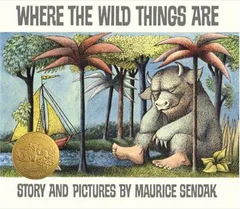 Where the Wild Things AreAges 3–6 · 5 min · 336 wordsFull book page
- Estimated read-aloud time
- about 5 minutes
- Words
- 336
- Sentences per spread
- 1
- Re-read tolerance
- 5/5strong repeat appeal
- Vocabulary
- 3/5a few new words
- Ages
- 3–6
Why it worksMax's bedroom grows into a forest after he is sent away, and the pictures expand until the wild rumpus occupies three wordless spreads. He leaves the monsters by choice when he wants to be loved, then finds his supper waiting and still hot.
Worth knowingThe monsters, punishment and threat to eat Max may unsettle younger listeners. When Sophie Gets Angry—Really, Really Angry... keeps its emotional journey in a recognizable home-and-nature setting; Max's version depends on fantasy and an unresolved parent-child conflict.
Full book page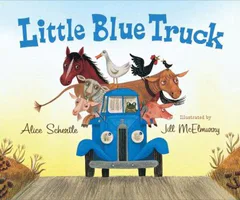 Little Blue TruckAges 2–4 · 5.5 min · 361 wordsFull book page
- Estimated read-aloud time
- about 5.5 minutes
- Words
- 361
- Sentences per spread
- 2
- Re-read tolerance
- 5/5strong repeat appeal
- Vocabulary
- 2/5everyday words
- Ages
- 2–4
Book features rhymes · repeated refrain · join-in questions
Why it worksBlue's greetings establish both the farm animals' sounds and the relationships that matter later. When the self-important dump truck gets stuck, Blue helps first and the animals then answer Blue's call, so the rescue follows directly from the earlier pattern of attention and courtesy.
Worth knowingThe dump truck's lesson is explicit, and the closing moral leaves little ambiguity for a reader to work out. Brown Bear, Brown Bear, What Do You See? offers a purer animal-naming refrain; Little Blue Truck adds a conflict, group rescue and vehicle sound play.
Full book page- We're Going on a Bear HuntAges 2–5 · 6 min · 410 wordsFull book page
- Estimated read-aloud time
- about 6 minutes
- Words
- 410
- Sentences per spread
- 2
- Re-read tolerance
- 5/5strong repeat appeal
- Vocabulary
- 2/5everyday words
- Ages
- 2–5
Book features repeated refrain · join-in questions
Why it worksThe family crosses grass, river, mud, forest and snowstorm through repeated obstacle language and distinct sound phrases, then reverses the entire route at speed after finding the bear. Movement and memory are built into the same structure.
Worth knowingThe encounter and chase can frighten sensitive listeners, and the energetic return is poorly suited to a final calming read. The Gruffalo uses repeated landscape encounters with verbal problem solving rather than physical escape.
Full book page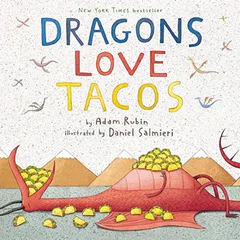 Dragons Love TacosAges 3–6 · 7 min · 501 wordsFull book page
- Estimated read-aloud time
- about 7 minutes
- Words
- 501
- Sentences per spread
- 2
- Re-read tolerance
- 5/5strong repeat appeal
- Vocabulary
- 2/5everyday words
- Ages
- 3–6
Book features repeated refrain · join-in questions
Why it worksThe narrator establishes one precise rule—dragons love tacos but cannot tolerate spicy salsa—then places mislabeled salsa at a taco party. The humor and plot both depend on the reader recognizing the warning before the fire-breathing consequence arrives.
Worth knowingThe spicy-salsa mistake leads to fire and a destroyed house before the dragons help rebuild it. If You Give a Mouse a Cookie is the quieter alternative: its consequences form a domestic loop rather than one destructive payoff.
Full book page- The Snail and the WhaleAges 4–6 · 8 min · 696 wordsFull book page
- Estimated read-aloud time
- about 8 minutes
- Words
- 696
- Sentences per spread
- 3
- Re-read tolerance
- 4/5good repeat appeal
- Vocabulary
- 4/5stretching
- Ages
- 4–6
Book features rhymes · repeated refrain
Why it worksThe snail chooses travel, sees contrasting landscapes from the whale's tail, then responds when the whale is stranded by writing a message for people at a school. The rescue reverses the apparent size imbalance: the smallest character supplies the actionable plan.
Worth knowingThe journey covers multiple settings before the beaching and rescue, so it is less refrain-driven than The Gruffalo. Stick Man also travels far from home, but his movement is forced and episodic rather than a chosen expedition.
Full book page- Stick ManAges 3–6 · 9 min · 731 wordsFull book page
- Estimated read-aloud time
- about 9 minutes
- Words
- 731
- Sentences per spread
- 3
- Re-read tolerance
- 4/5good repeat appeal
- Vocabulary
- 3/5a few new words
- Ages
- 3–6
Book features rhymes · repeated refrain · join-in questions
Why it worksEach new character mistakes Stick Man for an object—a fetch stick, flag mast, sword, hook or firewood—while his repeated self-description keeps his identity and family goal visible. The changing seasons give the accidental journey a clear duration before Santa provides the route home.
Worth knowingSeparation from his family occupies most of the story, and the final mistaken use puts him beside a lit fireplace. The Snail and the Whale is a better counterpart when the desired journey is chosen rather than imposed.
Full book page- ZogAges 3–6 · 9.5 min · 812 wordsFull book page
- Estimated read-aloud time
- about 9.5 minutes
- Words
- 812
- Sentences per spread
- 3
- Re-read tolerance
- 4/5good repeat appeal
- Vocabulary
- 3/5a few new words
- Ages
- 3–6
Book features rhymes · repeated refrain · join-in questions
Why it worksMadam Dragon's curriculum moves through flying, roaring, fire-breathing and princess capture, with Zog's accidents and the girl's first aid recurring between tests. The final encounter changes the assignment: the princess wants to be a doctor, and Zog becomes transport for a flying medical team.
Worth knowingThe US edition is titled A Gold Star for Zog, while UK listings use Zog. Compared with Rocking in My School Shoes, this is a multi-year fantasy curriculum and career reversal rather than a tour of one ordinary school day.
Full book page- Room on the BroomAges 3–6 · 10 min · 834 wordsFull book page
- Estimated read-aloud time
- about 10 minutes
- Words
- 834
- Sentences per spread
- 3
- Re-read tolerance
- 5/5strong repeat appeal
- Vocabulary
- 3/5a few new words
- Ages
- 3–6
Book features rhymes · repeated refrain · join-in questions
Why it worksThe witch repeatedly makes room for a dog, bird and frog after each animal retrieves something she has lost. Their additions first overload the broom, then make the later dragon rescue possible, linking generosity to a concrete return rather than a general friendship message.
Worth knowingThe broom snaps and a dragon threatens to eat the witch. Unlike The Gruffalo's solitary bluff, the solution depends on the animals combining into one frightening shape.
Full book page