
First Day of School Books
A school story can explain a place, follow a worried character or offer a way to talk about saying goodbye. Choose the closest task first. This guide brings preschool and kindergarten choices together while keeping their settings and emotional perspectives distinct.



Our top picks
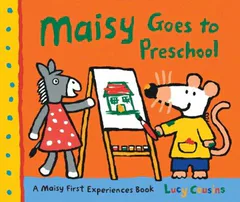 Maisy Goes to PreschoolAges 2–4 · 4.5 min · 232 wordsFull book page
- Estimated read-aloud time
- about 4.5 minutes
- Words
- 232
- Sentences per spread
- 1
- Re-read tolerance
- 3/5holds up
- Vocabulary
- 1/5plain words
- Ages
- 2–4
Book features join-in questions
Why it worksMaisy's day moves from coat peg through painting, snack, story, rest, bathroom, music and outdoor play, giving newcomers a concrete sequence without making separation the central conflict.
Worth knowingThe cheerful routine omits difficult drop-off and varies from real programs. Llama Llama Misses Mama better represents crying and gradual adjustment.
Full book page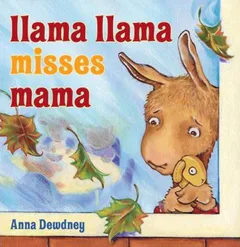 Llama Llama Misses MamaAges 2–4 · 5 min · about 352 wordsFull book page
- Estimated read-aloud time
- about 5 minutes
- Words
- 352approximate
- Sentences per spread
- 2
- Re-read tolerance
- 4/5good repeat appeal
- Vocabulary
- 2/5everyday words
- Ages
- 2–4
Book features rhymes · repeated refrain
Why it worksThe first school day includes tears, withdrawal and watching other children before Llama joins the activities; Mama's return does not erase the earlier distress. The rhyme carries the day from drop-off through play to reunion.
Worth knowingThe classroom routine is selective rather than a complete practical preview. Maisy Goes to Preschool names more concrete stops in the day, while this title gives more space to the child's separation feeling.
Full book page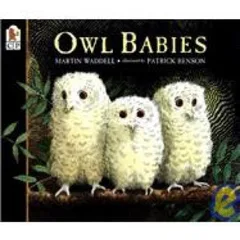 Owl BabiesAges 2–5 · 5 min · 325 wordsFull book page
- Estimated read-aloud time
- about 5 minutes
- Words
- 325
- Sentences per spread
- 1
- Re-read tolerance
- 5/5strong repeat appeal
- Vocabulary
- 2/5everyday words
- Ages
- 2–5
Book features repeated refrain · join-in questions
Why it worksSarah, Percy and Bill respond differently when their mother is absent, and their repeated exchange grows from explanation to huddling to Bill's blunt wish before her return.
Worth knowingThe mother leaves without explanation and the night setting can intensify separation worry. Llama Llama Misses Mama shows a full school day and gradual participation before reunion.
Full book page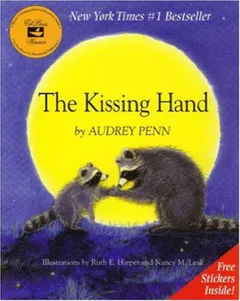 The Kissing HandAges 4–6 · 6 min · about 457 wordsFull book page
- Estimated read-aloud time
- about 6 minutes
- Words
- 457approximate
- Sentences per spread
- 3
- Re-read tolerance
- 3/5holds up
- Vocabulary
- 3/5a few new words
- Ages
- 4–6
Why it worksMrs. Raccoon places a kiss in Chester's palm and explains how he can press it to his cheek when school feels lonely. The ritual gives separation reassurance a specific action the child can carry into the classroom.
Worth knowingThe solution is symbolic and does not preview what happens during a school day. Llama Llama Misses Mama shows distress, gradual participation and pickup; this title concentrates on the goodbye ritual.
Full book page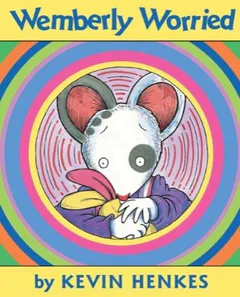 Wemberly WorriedAges 4–6 · 6.5 min · 525 wordsFull book page
- Estimated read-aloud time
- about 6.5 minutes
- Words
- 525
- Sentences per spread
- 2
- Re-read tolerance
- 3/5holds up
- Vocabulary
- 3/5a few new words
- Ages
- 4–6
Book features repeated refrain
Why it worksWemberly's worries attach to small concrete possibilities long before school, then multiply around the new setting. Meeting Jewel does not cure worry; it gives her a companion whose similar concerns make participation possible.
Worth knowingThe long catalogue of anxieties may supply new ideas to a highly suggestible listener. The Kissing Hand offers one compact separation ritual, while Wemberly focuses on recognition and companionship.
Full book page
Choose the part of the day you need to discuss
For naming school places, Pete the Cat: Rocking in My School Shoes follows a tour through the library, lunchroom and playground. For a young child meeting a preschool routine, Maisy gives a different setting and style. Compare the actual activities pictured with the child’s own school. A book can start a conversation about what is similar and what is different without being an exact preview of the coming day.
The Night Before Kindergarten frames an approaching event; School’s First Day of School gives the unfamiliar building its own perspective. These are useful when anticipation or the place itself is the question. The Pigeon Has to Go to School instead makes objections part of a direct conversation with the reader.
Keep the goodbye and the school routine separate
The Kissing Hand supplies a concrete family ritual around separation. Llama Llama Misses Mama follows a child character into a classroom. Owl Babies is a separation-and-return story outside school altogether. Choose the ritual when that is what you want to discuss, the classroom story when the sequence of being there matters, or Owl Babies when school-specific details would distract from the underlying feeling.
Read the story ahead if the child is sensitive to particular incidents. A reassuring ending does not remove every worrying moment on the way to it. A book can support conversation, but it does not guarantee an easy drop-off or replace the school’s actual arrangements.
Turn the fictional day into a useful conversation
After one relevant scene, identify a real detail: who will meet the child, where belongings go, what happens after goodbye or who can help. Do not invent the school’s answers to make the story fit. For a preschooler, a familiar routine may be enough; for kindergarten, the child may want to ask about a specific room or activity. Keep the answer tied to what the school has confirmed.
Compare every cover and read-aloud time
Open any book for its details, review and things worth knowing, right here. Read-aloud times are estimates for an unhurried pace, including time for page-turning and looking at pictures. How Owl and Page estimates read-aloud time.
- Maisy Goes to PreschoolAges 2–4 · 4.5 min · 232 wordsFull book page
- Estimated read-aloud time
- about 4.5 minutes
- Words
- 232
- Sentences per spread
- 1
- Re-read tolerance
- 3/5holds up
- Vocabulary
- 1/5plain words
- Ages
- 2–4
Book features join-in questions
Why it worksMaisy's day moves from coat peg through painting, snack, story, rest, bathroom, music and outdoor play, giving newcomers a concrete sequence without making separation the central conflict.
Worth knowingThe cheerful routine omits difficult drop-off and varies from real programs. Llama Llama Misses Mama better represents crying and gradual adjustment.
Full book page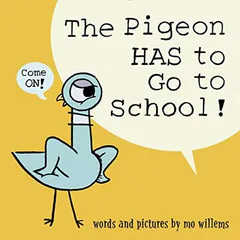 The Pigeon HAS to Go to School!Ages 3–5 · 4.5 min · 240 wordsFull book page
- Estimated read-aloud time
- about 4.5 minutes
- Words
- 240
- Sentences per spread
- 1
- Re-read tolerance
- 4/5good repeat appeal
- Vocabulary
- 2/5everyday words
- Ages
- 3–5
Book features repeated refrain · join-in questions
Why it worksPigeon states a series of distinct objections—he already knows everything, might dislike school, might be disliked by the teacher, and might learn too much—before reconsidering what school makes possible. Direct address lets a listener answer each claim instead of waiting passively for reassurance.
Worth knowingThe change of mind comes through comic argument rather than a tour of an actual school day. Pete the Cat: Rocking in My School Shoes is the more concrete alternative for naming locations such as the library, lunchroom and playground.
Full book page- Llama Llama Misses MamaAges 2–4 · 5 min · about 352 wordsFull book page
- Estimated read-aloud time
- about 5 minutes
- Words
- 352approximate
- Sentences per spread
- 2
- Re-read tolerance
- 4/5good repeat appeal
- Vocabulary
- 2/5everyday words
- Ages
- 2–4
Book features rhymes · repeated refrain
Why it worksThe first school day includes tears, withdrawal and watching other children before Llama joins the activities; Mama's return does not erase the earlier distress. The rhyme carries the day from drop-off through play to reunion.
Worth knowingThe classroom routine is selective rather than a complete practical preview. Maisy Goes to Preschool names more concrete stops in the day, while this title gives more space to the child's separation feeling.
Full book page- Owl BabiesAges 2–5 · 5 min · 325 wordsFull book page
- Estimated read-aloud time
- about 5 minutes
- Words
- 325
- Sentences per spread
- 1
- Re-read tolerance
- 5/5strong repeat appeal
- Vocabulary
- 2/5everyday words
- Ages
- 2–5
Book features repeated refrain · join-in questions
Why it worksSarah, Percy and Bill respond differently when their mother is absent, and their repeated exchange grows from explanation to huddling to Bill's blunt wish before her return.
Worth knowingThe mother leaves without explanation and the night setting can intensify separation worry. Llama Llama Misses Mama shows a full school day and gradual participation before reunion.
Full book page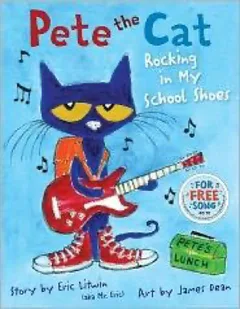 Pete the Cat: Rocking in My School ShoesAges 3–5 · 5 min · 319 wordsFull book page
- Estimated read-aloud time
- about 5 minutes
- Words
- 319
- Sentences per spread
- 2
- Re-read tolerance
- 4/5good repeat appeal
- Vocabulary
- 2/5everyday words
- Ages
- 3–5
Book features repeated refrain · join-in questions
Why it worksPete visits the library, lunchroom and playground while the same song links each unfamiliar location. That makes the book a concrete tour of a school day; unlike I Love My White Shoes, its repetition organizes places and routines rather than color changes.
Worth knowingThe library, lunchroom, playground and repeat visit tomorrow describe one recognizable version of school, but not every preschool, daycare or non-US setting uses the same rooms or routine.
Full book page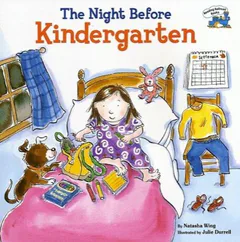 The Night Before KindergartenAges 4–6 · 5 min · about 350 wordsFull book page
- Estimated read-aloud time
- about 5 minutes
- Words
- 350approximate
- Sentences per spread
- 2
- Re-read tolerance
- 3/5holds up
- Vocabulary
- 2/5everyday words
- Ages
- 4–6
Book features rhymes
Why it worksThe familiar holiday poem's meter organizes preparation, arrival, classroom activities and goodbye as a shared event. The comic reversal at drop-off makes the parents, rather than the children, the ones struggling to let go.
Worth knowingThe story uses an American kindergarten framework, so families in the UK might need to adjust the concept for their own "reception" school terminology.
Full book page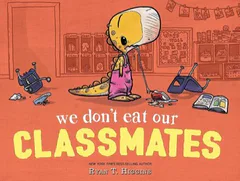 We Don't Eat Our ClassmatesAges 4–6 · 5.5 min · 409 wordsFull book page
- Estimated read-aloud time
- about 5.5 minutes
- Words
- 409
- Sentences per spread
- 2
- Re-read tolerance
- 5/5strong repeat appeal
- Vocabulary
- 3/5a few new words
- Ages
- 4–6
Book features repeated refrain
Why it worksPenelope repeatedly eats classmates and returns them after correction, but understanding changes only when the class goldfish bites her. The reversal makes bodily consequence—not an adult lecture—the route to empathy.
Worth knowingClassmates are swallowed and expelled for comedy, and the fish’s bite is the turning point. Sensitive readers may find the predation more alarming than the bright school setting suggests.
Full book page- The Kissing HandAges 4–6 · 6 min · about 457 wordsFull book page
- Estimated read-aloud time
- about 6 minutes
- Words
- 457approximate
- Sentences per spread
- 3
- Re-read tolerance
- 3/5holds up
- Vocabulary
- 3/5a few new words
- Ages
- 4–6
Why it worksMrs. Raccoon places a kiss in Chester's palm and explains how he can press it to his cheek when school feels lonely. The ritual gives separation reassurance a specific action the child can carry into the classroom.
Worth knowingThe solution is symbolic and does not preview what happens during a school day. Llama Llama Misses Mama shows distress, gradual participation and pickup; this title concentrates on the goodbye ritual.
Full book page- Wemberly WorriedAges 4–6 · 6.5 min · 525 wordsFull book page
- Estimated read-aloud time
- about 6.5 minutes
- Words
- 525
- Sentences per spread
- 2
- Re-read tolerance
- 3/5holds up
- Vocabulary
- 3/5a few new words
- Ages
- 4–6
Book features repeated refrain
Why it worksWemberly's worries attach to small concrete possibilities long before school, then multiply around the new setting. Meeting Jewel does not cure worry; it gives her a companion whose similar concerns make participation possible.
Worth knowingThe long catalogue of anxieties may supply new ideas to a highly suggestible listener. The Kissing Hand offers one compact separation ritual, while Wemberly focuses on recognition and companionship.
Full book page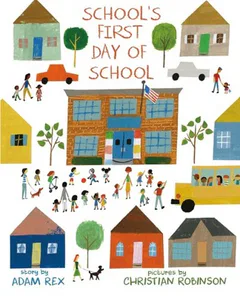 School's First Day of SchoolAges 4–6 · 9.5 min · about 852 wordsFull book page
- Estimated read-aloud time
- about 9.5 minutes
- Words
- 852approximate
- Sentences per spread
- 3
- Re-read tolerance
- 4/5good repeat appeal
- Vocabulary
- 3/5a few new words
- Ages
- 4–6
Why it worksFrederick Douglass Elementary begins uncertain about the children, reacts to noise and mess, and gradually discovers what a school can do with them. Giving the building the anxious viewpoint lets the child observe first-day worry from a safer distance.
Full book page