When Do Kids Learn to Read?
Reading develops through several skills rather than one birthday or one successful performance. Recognizing a familiar book, understanding a story, connecting letters with sounds and reading unfamiliar words are different things. Use this guide to identify the task you are observing and choose useful support without assigning a child a deadline.

Separate understanding a story from reading its words
A child can follow a story read by an adult long before they can read the same printed text alone. They may also repeat a familiar book from memory. Those experiences matter, but neither establishes what they can do with unfamiliar words. Keep shared reading available while looking separately at word-reading practice.
When comparing books, ask two questions: what story or idea does the child want to hear, and what printed text can they currently work through? The answers can point to two different books. There is no need for listening choices to shrink to the vocabulary used in independent practice.
Observe the particular task
For word reading, notice whether the child recognizes taught letter–sound patterns and blends them across a word. For a shared story, notice whether they can follow an event or explain a picture. For an independent passage, notice whether they understand what they have read as well as identifying its words. These observations concern different skills, so one cannot be used as a complete score for the others.
A book chosen for decoding practice should match what has been taught. A repetitive favorite can support a pleasurable shared session but may conceal how much reading is coming from memory. Use a suitably matched unfamiliar passage when the specific task is working through new print.
Choose support with the people teaching the child
Ask the teacher which patterns or text features the child is currently practicing and which book would match that work. If a page is difficult, identify its actual demand: an untaught spelling, unfamiliar vocabulary, a longer sentence or understanding the incident. Increasing book length by age does not answer those different needs.
Where progress or difficulty is a concern, take concrete examples to the teacher or the relevant professional instead of using an online age chart as a diagnosis. This guide identifies reading tasks; it does not supply individualized assessment or claim that a particular story prevents a reading difficulty.
Keep practice and pleasure on the same shelf
Use a manageable practice book when that is the task, then share a story chosen for its humor, characters, pictures or subject. A wordless book can invite detailed interpretation; an adult-read chapter story can offer a continuing plot. Neither is a failure to move forward. The linked phonics and first-reading guides help with specific text choices, while the profiles explain what each story contributes.
Compare every cover and read-aloud time
Open any book for its details, review and things worth knowing, right here. Read-aloud times are estimates for an unhurried pace, including time for page-turning and looking at pictures. How Owl and Page estimates read-aloud time.
 Freight TrainAges 0–4 · 3 min · about 60 wordsFull book page
- Estimated read-aloud time
- about 3 minutes
- Words
- 60approximate
- Sentences per spread
- 1
- Re-read tolerance
- 4/5good repeat appeal
- Vocabulary
- 2/5everyday words
- Ages
- 0–4
Book features repeated refrain · join-in questions
Why it worksA brightly colored train changes as it travels through tunnels, cities and trestles, letting a child follow the same object through shifting surroundings.
Worth knowingThe interest is visual motion and naming rather than a character problem. The Little Engine That Could offers a longer train story with a goal, refusals and a climb.
Full book page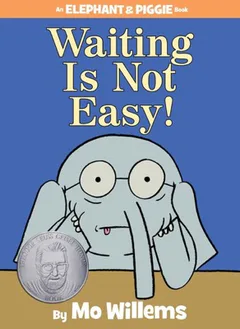 Waiting Is Not Easy!Ages 3–6 · 3 min · 197 wordsFull book page
- Estimated read-aloud time
- about 3 minutes
- Words
- 197
- Sentences per spread
- 1
- Re-read tolerance
- 5/5strong repeat appeal
- Vocabulary
- 1/5plain words
- Ages
- 3–6
Book features repeated refrain
Why it worksPiggie promises a surprise but will not reveal it early, and Gerald's repeated groans expand as daylight gives way to night. The final starry spread changes the pace and visual scale of the book, so the payoff depends on elapsed time rather than the escalating mishap used in There Is a Bird on Your Head!.
Worth knowingThe surprise is intentionally delayed until the closing night-sky scene. Readers wanting continuous action get repetition and anticipation instead.
Full book page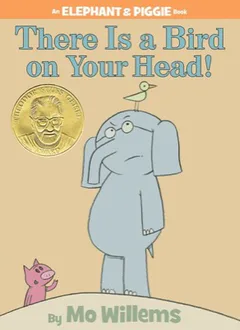 There Is a Bird on Your Head!Ages 3–6 · 3.5 min · 242 wordsFull book page
- Estimated read-aloud time
- about 3.5 minutes
- Words
- 242
- Sentences per spread
- 1
- Re-read tolerance
- 5/5strong repeat appeal
- Vocabulary
- 1/5plain words
- Ages
- 3–6
Book features repeated refrain
Why it worksGerald's problem grows visibly from one bird to two, then a nest and eggs, while Piggie's short replies keep the solution in dialogue. The color-coded speech bubbles also make the two roles easy to separate; Waiting Is Not Easy uses the same pair for an emotional time arc instead of an escalating physical predicament.
Worth knowingThe plot depends on Gerald not directly asking the birds to move until Piggie suggests it. Readers looking for a more independent problem-solving arc may prefer another Elephant & Piggie title.
Full book page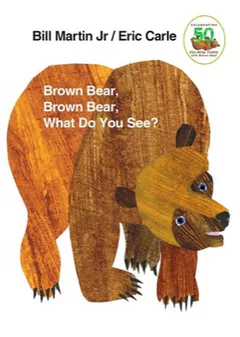 Brown Bear, Brown Bear, What Do You See?Ages 0–4 · 4 min · 196 wordsFull book page
- Estimated read-aloud time
- about 4 minutes
- Words
- 196
- Sentences per spread
- 1
- Re-read tolerance
- 5/5strong repeat appeal
- Vocabulary
- 1/5plain words
- Ages
- 0–4
Book features rhymes · repeated refrain · join-in questions
Why it worksEach animal names the next one in the same question-and-answer frame, so the facing image supplies the answer before the page turns. The final teacher-and-children sequence gathers the entire color-and-animal chain into one recall task.
Worth knowingThe palette includes deliberately fanciful animals, so it is pattern play rather than a realistic color reference. The Very Hungry Caterpillar tracks quantity and change across a week; Brown Bear is better for immediate recitation and visual prediction.
Full book page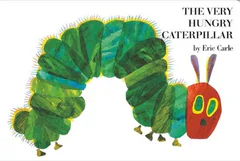 The Very Hungry CaterpillarAges 2–4 · 4 min · 221 wordsFull book page
- Estimated read-aloud time
- about 4 minutes
- Words
- 221
- Sentences per spread
- 1
- Re-read tolerance
- 5/5strong repeat appeal
- Vocabulary
- 2/5everyday words
- Ages
- 2–4
Book features repeated refrain · join-in questions
Why it worksFive weekday spreads add one fruit at a time and one new hole to count; Saturday breaks that measured pattern with ten named foods before Sunday returns to one leaf. The holes, page sizes, days and quantities all carry information rather than serving as decoration.
Worth knowingThe food sequence is a stylized route to metamorphosis, not a factual account of caterpillar feeding or a complete life-cycle explanation. Brown Bear, Brown Bear, What Do You See? is the closer choice when the main task is repeating a fixed spoken pattern rather than tracking change across a week.
Full book page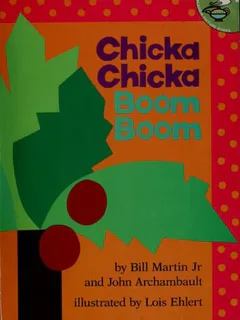 Chicka Chicka Boom BoomAges 2–5 · 5 min · about 300 wordsFull book page
- Estimated read-aloud time
- about 5 minutes
- Words
- 300approximate
- Sentences per spread
- 2
- Re-read tolerance
- 5/5strong repeat appeal
- Vocabulary
- 2/5everyday words
- Ages
- 2–5
Book features rhymes · repeated refrain · join-in questions
Why it worksLowercase letters climb the coconut tree in alphabetical order until the crowded tree bends and the whole group falls. The uppercase relatives then arrive to collect them, while Lois Ehlert's bold shapes keep individual letters legible inside a fast chant.
Worth knowingThe alphabet sequence is memorable, but the book does not teach letter sounds or explain why upper- and lowercase forms correspond. Brown Bear, Brown Bear, What Do You See? uses a similarly dependable spoken frame for color-and-animal prediction rather than letter order.
Full book page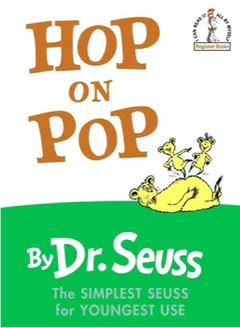 Hop on PopAges 3–5 · 5 min · 384 wordsFull book page
- Estimated read-aloud time
- about 5 minutes
- Words
- 384
- Sentences per spread
- 1
- Re-read tolerance
- 4/5good repeat appeal
- Vocabulary
- 1/5plain words
- Ages
- 3–5
Book features rhymes · join-in questions
Why it worksLarge-print word families are paired with short visual jokes, letting a beginning reader compare sounds and see a literal scene change when one letter changes. Independent spreads allow practice to stop without abandoning a plot.
Worth knowingSeveral lines are nonsense or deliberately rough slapstick, and the book does not teach a systematic phonics progression. Green Eggs and Ham uses the same limited-vocabulary discipline inside one sustained story.
Full book page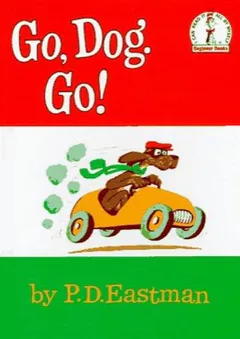 Go, Dog. Go!Ages 2–5 · 6.5 min · 515 wordsFull book page
- Estimated read-aloud time
- about 6.5 minutes
- Words
- 515
- Sentences per spread
- 1
- Re-read tolerance
- 4/5good repeat appeal
- Vocabulary
- 1/5plain words
- Ages
- 2–5
Book features repeated refrain · join-in questions
Why it worksOpposites and position words appear as visible dog arrangements before the loose episodes converge at the dog party in a tree. The recurring hat exchange supplies a small comic thread inside the concept practice.
Worth knowingThis is a sequence of language-and-picture situations rather than a sustained plot. Are You My Mother? uses equally controlled vocabulary around one continuous search, making it the stronger narrative choice.
Full book page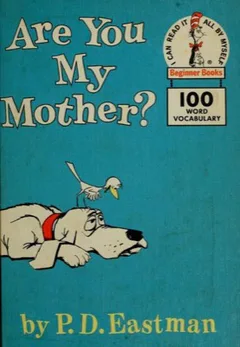 Are You My Mother?Ages 3–5 · 8 min · 699 wordsFull book page
- Estimated read-aloud time
- about 8 minutes
- Words
- 699
- Sentences per spread
- 1
- Re-read tolerance
- 4/5good repeat appeal
- Vocabulary
- 1/5plain words
- Ages
- 3–5
Book features repeated refrain · join-in questions
Why it worksA newly hatched bird leaves the nest and repeats one question to animals, machines and an increasingly alarming excavator before returning to his mother. The fixed question lets a beginning reader participate while the possible answers become less plausible.
Worth knowingThe baby is lost and alone for most of the book, and the Snort machine creates real peril before the reunion. Go, Dog. Go! is more episodic and less emotionally tense, with concept practice rather than a search.
Full book page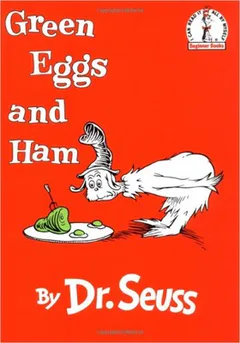 Green Eggs and HamAges 3–6 · 8.5 min · 769 wordsFull book page
- Estimated read-aloud time
- about 8.5 minutes
- Words
- 769
- Sentences per spread
- 2
- Re-read tolerance
- 5/5strong repeat appeal
- Vocabulary
- 1/5plain words
- Ages
- 3–6
Book features rhymes · repeated refrain · join-in questions
Why it worksSam-I-am varies place, company and transport while preserving the central refusal, turning a fifty-word vocabulary into an accumulating verbal structure. The eventual taste changes the answer and requires the long list to be reconsidered.
Worth knowingAt over 60 pages, this is a long read for its level. The constant repetition can be quite tiring for the adult reading it.
Full book page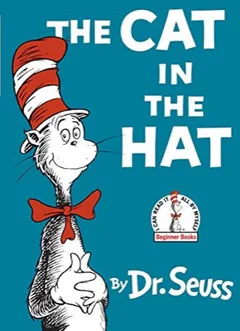 The Cat in the HatAges 4–6 · 16 min · 1,621 wordsFull book page
- Estimated read-aloud time
- about 16 minutes
- Words
- 1,621
- Sentences per spread
- 2
- Re-read tolerance
- 4/5good repeat appeal
- Vocabulary
- 2/5everyday words
- Ages
- 4–6
Book features rhymes
Why it worksA limited beginner-reader vocabulary is stretched through rhyme, mounting household disorder and the deadline of Mother's return. The Cat's balancing act and the Things escalate one problem rather than resetting from spread to spread.
Worth knowingThe Cat ignores the children's and fish's objections, and the long cleanup suspense can run about fifteen minutes aloud. Green Eggs and Ham uses a similarly restricted vocabulary with a simpler visual conflict.
Full book page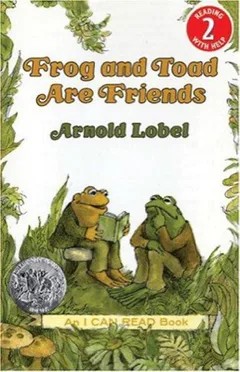 Frog and Toad Are FriendsAges 4–6 · 22 min · 2,281 wordsFull book page
- Estimated read-aloud time
- about 22 minutes
- Words
- 2,281
- Sentences per spread
- 3
- Re-read tolerance
- 4/5good repeat appeal
- Vocabulary
- 2/5everyday words
- Ages
- 4–6
Why it worksFive self-contained stories let a new reader complete a chapter-sized arc, while Frog and Toad's contrasting temperaments carry continuity across waking, searching, waiting and storytelling episodes.
Worth knowingThe quiet pacing is deliberately less joke-dense than Elephant & Piggie, and the whole volume is long for one sitting. Henry and Mudge offers similarly gentle early chapters with a child-and-dog relationship rather than two equal friends.
Full book page