Books Like Elephant and Piggie
Choose what to keep from Elephant & Piggie: two readable voices, a visible comic problem or a short incident about friendship. Other early-reader books may offer controlled vocabulary or short episodes without the same speech-bubble layout. This guide makes those differences explicit.
Our top picks
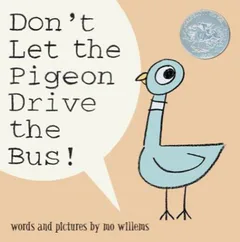 Don't Let the Pigeon Drive the Bus!Ages 2–5 · 3.5 min · 161 wordsFull book page
- Estimated read-aloud time
- about 3.5 minutes
- Words
- 161
- Sentences per spread
- 1
- Re-read tolerance
- 5/5strong repeat appeal
- Vocabulary
- 2/5everyday words
- Ages
- 2–5
Book features repeated refrain · join-in questions
Why it worksPigeon cycles through bargaining, flattery, invented permission, promises and a full-page outburst after the bus driver leaves one clear instruction. Because every appeal faces outward, the listener becomes the person who must hold the boundary.
Worth knowingThe ending redirects Pigeon's desire toward a different vehicle rather than showing him accept the rule. There Is a Bird on Your Head! is the closer choice for two-character problem solving; this book is a one-sided persuasion game.
Full book page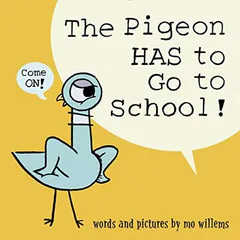 The Pigeon HAS to Go to School!Ages 3–5 · 4.5 min · 240 wordsFull book page
- Estimated read-aloud time
- about 4.5 minutes
- Words
- 240
- Sentences per spread
- 1
- Re-read tolerance
- 4/5good repeat appeal
- Vocabulary
- 2/5everyday words
- Ages
- 3–5
Book features repeated refrain · join-in questions
Why it worksPigeon states a series of distinct objections—he already knows everything, might dislike school, might be disliked by the teacher, and might learn too much—before reconsidering what school makes possible. Direct address lets a listener answer each claim instead of waiting passively for reassurance.
Worth knowingThe change of mind comes through comic argument rather than a tour of an actual school day. Pete the Cat: Rocking in My School Shoes is the more concrete alternative for naming locations such as the library, lunchroom and playground.
Full book page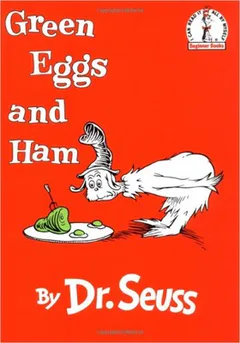 Green Eggs and HamAges 3–6 · 8.5 min · 769 wordsFull book page
- Estimated read-aloud time
- about 8.5 minutes
- Words
- 769
- Sentences per spread
- 2
- Re-read tolerance
- 5/5strong repeat appeal
- Vocabulary
- 1/5plain words
- Ages
- 3–6
Book features rhymes · repeated refrain · join-in questions
Why it worksSam-I-am varies place, company and transport while preserving the central refusal, turning a fifty-word vocabulary into an accumulating verbal structure. The eventual taste changes the answer and requires the long list to be reconsidered.
Worth knowingAt over 60 pages, this is a long read for its level. The constant repetition can be quite tiring for the adult reading it.
Full book page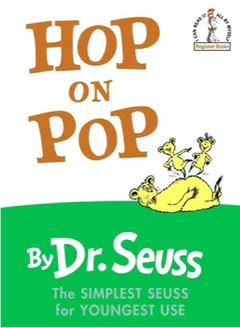 Hop on PopAges 3–5 · 5 min · 384 wordsFull book page
- Estimated read-aloud time
- about 5 minutes
- Words
- 384
- Sentences per spread
- 1
- Re-read tolerance
- 4/5good repeat appeal
- Vocabulary
- 1/5plain words
- Ages
- 3–5
Book features rhymes · join-in questions
Why it worksLarge-print word families are paired with short visual jokes, letting a beginning reader compare sounds and see a literal scene change when one letter changes. Independent spreads allow practice to stop without abandoning a plot.
Worth knowingSeveral lines are nonsense or deliberately rough slapstick, and the book does not teach a systematic phonics progression. Green Eggs and Ham uses the same limited-vocabulary discipline inside one sustained story.
Full book page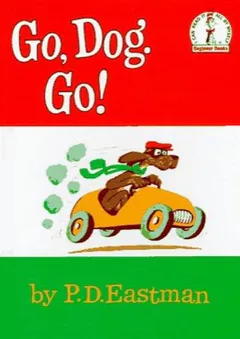 Go, Dog. Go!Ages 2–5 · 6.5 min · 515 wordsFull book page
- Estimated read-aloud time
- about 6.5 minutes
- Words
- 515
- Sentences per spread
- 1
- Re-read tolerance
- 4/5good repeat appeal
- Vocabulary
- 1/5plain words
- Ages
- 2–5
Book features repeated refrain · join-in questions
Why it worksOpposites and position words appear as visible dog arrangements before the loose episodes converge at the dog party in a tree. The recurring hat exchange supplies a small comic thread inside the concept practice.
Worth knowingThis is a sequence of language-and-picture situations rather than a sustained plot. Are You My Mother? uses equally controlled vocabulary around one continuous search, making it the stronger narrative choice.
Full book page
A dialogue book is a particular reading format
Elephant & Piggie makes the speakers distinct through its layout and contrasting characters. The Pigeon’s direct appeals also make a second voice useful, but the exchange is with the reader rather than a steady pair of characters. Frog and Toad tells incidents about two friends through a more conventional narrative format. Choose by whether you want assigned dialogue roles, a character arguing outward or a narrated friendship story.
When taking turns, agree which words the adult will carry. The clear roles do not establish that every word is independently readable for a beginner. A short bubble can contain an unfamiliar word, and a large expressive word can be part of the visual joke.
Repeated words and decoding practice are different
Green Eggs and Ham builds an extended exchange around a limited recurring vocabulary. Hop on Pop uses short word patterns in a different sequence. Go, Dog. Go! includes another mixture of words and visual incidents. Check the actual page against the reader’s knowledge rather than calling all three the same level.
For practice following a taught phonics sequence, use the phonics guide instead of assuming a familiar early-reader label is enough. These books can be enjoyable shared reading even when some of their spelling patterns still need adult help.
Choose the kind of incident
Hi! Fly Guy uses an unusual companion and a compact comic premise; Are You My Mother? follows a search; Frog and Toad offers self-contained episodes. Compare the shape of the problem and its resolution as well as text length. The Elephant & Piggie books are excluded from the recommendations so this shelf provides another reading experience rather than a list of the reader’s existing series.
Compare every cover and read-aloud time
Open any book for its details, review and things worth knowing, right here. Read-aloud times are estimates for an unhurried pace, including time for page-turning and looking at pictures. How Owl and Page estimates read-aloud time.
- Don't Let the Pigeon Drive the Bus!Ages 2–5 · 3.5 min · 161 wordsFull book page
- Estimated read-aloud time
- about 3.5 minutes
- Words
- 161
- Sentences per spread
- 1
- Re-read tolerance
- 5/5strong repeat appeal
- Vocabulary
- 2/5everyday words
- Ages
- 2–5
Book features repeated refrain · join-in questions
Why it worksPigeon cycles through bargaining, flattery, invented permission, promises and a full-page outburst after the bus driver leaves one clear instruction. Because every appeal faces outward, the listener becomes the person who must hold the boundary.
Worth knowingThe ending redirects Pigeon's desire toward a different vehicle rather than showing him accept the rule. There Is a Bird on Your Head! is the closer choice for two-character problem solving; this book is a one-sided persuasion game.
Full book page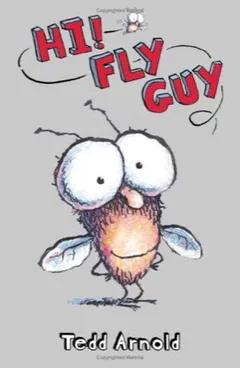 Hi! Fly GuyAges 5–6 · 4.5 min · 324 wordsFull book page
- Estimated read-aloud time
- about 4.5 minutes
- Words
- 324
- Sentences per spread
- 1
- Re-read tolerance
- 4/5good repeat appeal
- Vocabulary
- 1/5plain words
- Ages
- 5–6
Book features repeated refrain · join-in questions
Why it worksFly Guy earns recognition through specific actions after adults and judges reject the idea that a fly can be a pet.
Worth knowingThe story calls flies pests and centers a judged pet contest; children may need help separating the fantasy pet from real insect handling.
Full book page- The Pigeon HAS to Go to School!Ages 3–5 · 4.5 min · 240 wordsFull book page
- Estimated read-aloud time
- about 4.5 minutes
- Words
- 240
- Sentences per spread
- 1
- Re-read tolerance
- 4/5good repeat appeal
- Vocabulary
- 2/5everyday words
- Ages
- 3–5
Book features repeated refrain · join-in questions
Why it worksPigeon states a series of distinct objections—he already knows everything, might dislike school, might be disliked by the teacher, and might learn too much—before reconsidering what school makes possible. Direct address lets a listener answer each claim instead of waiting passively for reassurance.
Worth knowingThe change of mind comes through comic argument rather than a tour of an actual school day. Pete the Cat: Rocking in My School Shoes is the more concrete alternative for naming locations such as the library, lunchroom and playground.
Full book page- Hop on PopAges 3–5 · 5 min · 384 wordsFull book page
- Estimated read-aloud time
- about 5 minutes
- Words
- 384
- Sentences per spread
- 1
- Re-read tolerance
- 4/5good repeat appeal
- Vocabulary
- 1/5plain words
- Ages
- 3–5
Book features rhymes · join-in questions
Why it worksLarge-print word families are paired with short visual jokes, letting a beginning reader compare sounds and see a literal scene change when one letter changes. Independent spreads allow practice to stop without abandoning a plot.
Worth knowingSeveral lines are nonsense or deliberately rough slapstick, and the book does not teach a systematic phonics progression. Green Eggs and Ham uses the same limited-vocabulary discipline inside one sustained story.
Full book page- Go, Dog. Go!Ages 2–5 · 6.5 min · 515 wordsFull book page
- Estimated read-aloud time
- about 6.5 minutes
- Words
- 515
- Sentences per spread
- 1
- Re-read tolerance
- 4/5good repeat appeal
- Vocabulary
- 1/5plain words
- Ages
- 2–5
Book features repeated refrain · join-in questions
Why it worksOpposites and position words appear as visible dog arrangements before the loose episodes converge at the dog party in a tree. The recurring hat exchange supplies a small comic thread inside the concept practice.
Worth knowingThis is a sequence of language-and-picture situations rather than a sustained plot. Are You My Mother? uses equally controlled vocabulary around one continuous search, making it the stronger narrative choice.
Full book page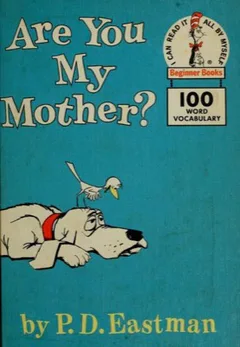 Are You My Mother?Ages 3–5 · 8 min · 699 wordsFull book page
- Estimated read-aloud time
- about 8 minutes
- Words
- 699
- Sentences per spread
- 1
- Re-read tolerance
- 4/5good repeat appeal
- Vocabulary
- 1/5plain words
- Ages
- 3–5
Book features repeated refrain · join-in questions
Why it worksA newly hatched bird leaves the nest and repeats one question to animals, machines and an increasingly alarming excavator before returning to his mother. The fixed question lets a beginning reader participate while the possible answers become less plausible.
Worth knowingThe baby is lost and alone for most of the book, and the Snort machine creates real peril before the reunion. Go, Dog. Go! is more episodic and less emotionally tense, with concept practice rather than a search.
Full book page- Green Eggs and HamAges 3–6 · 8.5 min · 769 wordsFull book page
- Estimated read-aloud time
- about 8.5 minutes
- Words
- 769
- Sentences per spread
- 2
- Re-read tolerance
- 5/5strong repeat appeal
- Vocabulary
- 1/5plain words
- Ages
- 3–6
Book features rhymes · repeated refrain · join-in questions
Why it worksSam-I-am varies place, company and transport while preserving the central refusal, turning a fifty-word vocabulary into an accumulating verbal structure. The eventual taste changes the answer and requires the long list to be reconsidered.
Worth knowingAt over 60 pages, this is a long read for its level. The constant repetition can be quite tiring for the adult reading it.
Full book page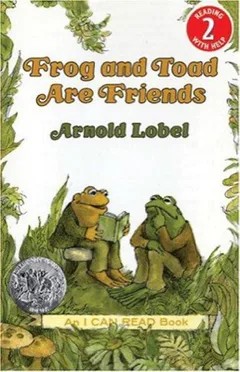 Frog and Toad Are FriendsAges 4–6 · 22 min · 2,281 wordsFull book page
- Estimated read-aloud time
- about 22 minutes
- Words
- 2,281
- Sentences per spread
- 3
- Re-read tolerance
- 4/5good repeat appeal
- Vocabulary
- 2/5everyday words
- Ages
- 4–6
Why it worksFive self-contained stories let a new reader complete a chapter-sized arc, while Frog and Toad's contrasting temperaments carry continuity across waking, searching, waiting and storytelling episodes.
Worth knowingThe quiet pacing is deliberately less joke-dense than Elephant & Piggie, and the whole volume is long for one sitting. Henry and Mudge offers similarly gentle early chapters with a child-and-dog relationship rather than two equal friends.
Full book page