Books Like Pete the Cat
Pete the Cat can mean a sung response, a recurring phrase, a color sequence or a relaxed comic character. These alternatives preserve different parts of that experience. Use the guide to choose the next mechanism instead of expecting every repeating picture book to sound like Pete.


Our top picks
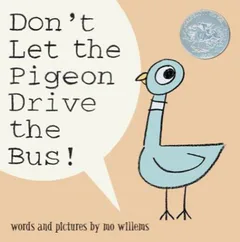 Don't Let the Pigeon Drive the Bus!Ages 2–5 · 3.5 min · 161 wordsFull book page
- Estimated read-aloud time
- about 3.5 minutes
- Words
- 161
- Sentences per spread
- 1
- Re-read tolerance
- 5/5strong repeat appeal
- Vocabulary
- 2/5everyday words
- Ages
- 2–5
Book features repeated refrain · join-in questions
Why it worksPigeon cycles through bargaining, flattery, invented permission, promises and a full-page outburst after the bus driver leaves one clear instruction. Because every appeal faces outward, the listener becomes the person who must hold the boundary.
Worth knowingThe ending redirects Pigeon's desire toward a different vehicle rather than showing him accept the rule. There Is a Bird on Your Head! is the closer choice for two-character problem solving; this book is a one-sided persuasion game.
Full book page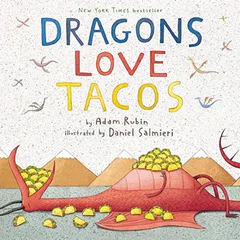 Dragons Love TacosAges 3–6 · 7 min · 501 wordsFull book page
- Estimated read-aloud time
- about 7 minutes
- Words
- 501
- Sentences per spread
- 2
- Re-read tolerance
- 5/5strong repeat appeal
- Vocabulary
- 2/5everyday words
- Ages
- 3–6
Book features repeated refrain · join-in questions
Why it worksThe narrator establishes one precise rule—dragons love tacos but cannot tolerate spicy salsa—then places mislabeled salsa at a taco party. The humor and plot both depend on the reader recognizing the warning before the fire-breathing consequence arrives.
Worth knowingThe spicy-salsa mistake leads to fire and a destroyed house before the dragons help rebuild it. If You Give a Mouse a Cookie is the quieter alternative: its consequences form a domestic loop rather than one destructive payoff.
Full book page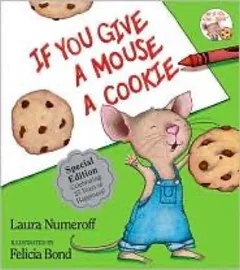 If You Give a Mouse a CookieAges 3–5 · 5 min · 291 wordsFull book page
- Estimated read-aloud time
- about 5 minutes
- Words
- 291
- Sentences per spread
- 1
- Re-read tolerance
- 5/5strong repeat appeal
- Vocabulary
- 2/5everyday words
- Ages
- 3–5
Book features repeated refrain · join-in questions
Why it worksEach request creates the condition for the next—milk needs a straw, the straw leads to a mirror, and later actions circle back to another cookie. The value is the closed causal chain, not a lesson that every real request escalates in the same way.
Worth knowingThe boy continually serves the mouse's requests without setting a limit. Dragons Love Tacos uses a single ignored food warning and one large consequence instead of a circular request chain.
Full book page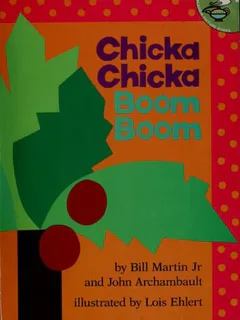 Chicka Chicka Boom BoomAges 2–5 · 5 min · about 300 wordsFull book page
- Estimated read-aloud time
- about 5 minutes
- Words
- 300approximate
- Sentences per spread
- 2
- Re-read tolerance
- 5/5strong repeat appeal
- Vocabulary
- 2/5everyday words
- Ages
- 2–5
Book features rhymes · repeated refrain · join-in questions
Why it worksLowercase letters climb the coconut tree in alphabetical order until the crowded tree bends and the whole group falls. The uppercase relatives then arrive to collect them, while Lois Ehlert's bold shapes keep individual letters legible inside a fast chant.
Worth knowingThe alphabet sequence is memorable, but the book does not teach letter sounds or explain why upper- and lowercase forms correspond. Brown Bear, Brown Bear, What Do You See? uses a similarly dependable spoken frame for color-and-animal prediction rather than letter order.
Full book page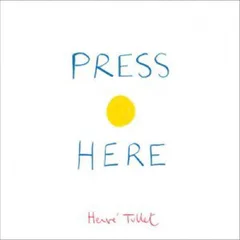 Press HereAges 2–5 · 4.5 min · about 252 wordsFull book page
- Estimated read-aloud time
- about 4.5 minutes
- Words
- 252approximate
- Sentences per spread
- 1
- Re-read tolerance
- 5/5strong repeat appeal
- Vocabulary
- 2/5everyday words
- Ages
- 2–5
Book features repeated refrain · join-in questions
Why it worksPrinted dots appear to respond after the reader presses, shakes, tilts and claps, so the page turn becomes the mechanism connecting instruction and result. The child must remember the requested action and inspect what changed.
Full book page
Choose between a refrain and an argument
Pete’s White Shoes puts a repeated response inside a sequence of color changes. We’re Going on a Bear Hunt gives a group a recurring journey pattern and sound sequence. Chicka Chicka Boom Boom makes alphabet movement and rhythm central. These retain the appeal of a repeated spoken pattern but ask the listener to follow different sequences.
The Pigeon instead argues with the reader. Its participation is a reply to a character’s request, not a sung reset after each incident. Choose it when a playful disagreement is the attraction; choose a refrain-led book when the reader wants a predictable place to join in.
Choose how the next event is connected
If You Give a Mouse a Cookie follows one demand into another. Little Blue Truck makes help and a shared solution part of its roadside story. Dragons Love Tacos explains an absurd preference and a consequence. The difference is useful when you want more than a recurring response: a chain, a cooperative incident or a comic rule that can go wrong.
Press Here is another change of task. It asks the reader to act and then inspect the next printed page. That is a pretend interactive mechanism rather than a physical button or a song. Read the profile if the child’s favorite part of Pete is a particular kind of action.
Compare the actual Pete title you know
White Shoes and Rocking in My School Shoes do not organize their events in the same way: one follows transformations, the other school places. A useful alternative should connect with that specific book rather than with the brand name alone. The Pete books themselves are excluded from the recommendations, and the next choice can introduce a new kind of participation without needing to reproduce the same character.
Compare every cover and read-aloud time
Open any book for its details, review and things worth knowing, right here. Read-aloud times are estimates for an unhurried pace, including time for page-turning and looking at pictures. How Owl and Page estimates read-aloud time.
- Don't Let the Pigeon Drive the Bus!Ages 2–5 · 3.5 min · 161 wordsFull book page
- Estimated read-aloud time
- about 3.5 minutes
- Words
- 161
- Sentences per spread
- 1
- Re-read tolerance
- 5/5strong repeat appeal
- Vocabulary
- 2/5everyday words
- Ages
- 2–5
Book features repeated refrain · join-in questions
Why it worksPigeon cycles through bargaining, flattery, invented permission, promises and a full-page outburst after the bus driver leaves one clear instruction. Because every appeal faces outward, the listener becomes the person who must hold the boundary.
Worth knowingThe ending redirects Pigeon's desire toward a different vehicle rather than showing him accept the rule. There Is a Bird on Your Head! is the closer choice for two-character problem solving; this book is a one-sided persuasion game.
Full book page- Press HereAges 2–5 · 4.5 min · about 252 wordsFull book page
- Estimated read-aloud time
- about 4.5 minutes
- Words
- 252approximate
- Sentences per spread
- 1
- Re-read tolerance
- 5/5strong repeat appeal
- Vocabulary
- 2/5everyday words
- Ages
- 2–5
Book features repeated refrain · join-in questions
Why it worksPrinted dots appear to respond after the reader presses, shakes, tilts and claps, so the page turn becomes the mechanism connecting instruction and result. The child must remember the requested action and inspect what changed.
Full book page- Chicka Chicka Boom BoomAges 2–5 · 5 min · about 300 wordsFull book page
- Estimated read-aloud time
- about 5 minutes
- Words
- 300approximate
- Sentences per spread
- 2
- Re-read tolerance
- 5/5strong repeat appeal
- Vocabulary
- 2/5everyday words
- Ages
- 2–5
Book features rhymes · repeated refrain · join-in questions
Why it worksLowercase letters climb the coconut tree in alphabetical order until the crowded tree bends and the whole group falls. The uppercase relatives then arrive to collect them, while Lois Ehlert's bold shapes keep individual letters legible inside a fast chant.
Worth knowingThe alphabet sequence is memorable, but the book does not teach letter sounds or explain why upper- and lowercase forms correspond. Brown Bear, Brown Bear, What Do You See? uses a similarly dependable spoken frame for color-and-animal prediction rather than letter order.
Full book page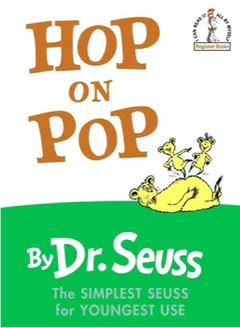 Hop on PopAges 3–5 · 5 min · 384 wordsFull book page
- Estimated read-aloud time
- about 5 minutes
- Words
- 384
- Sentences per spread
- 1
- Re-read tolerance
- 4/5good repeat appeal
- Vocabulary
- 1/5plain words
- Ages
- 3–5
Book features rhymes · join-in questions
Why it worksLarge-print word families are paired with short visual jokes, letting a beginning reader compare sounds and see a literal scene change when one letter changes. Independent spreads allow practice to stop without abandoning a plot.
Worth knowingSeveral lines are nonsense or deliberately rough slapstick, and the book does not teach a systematic phonics progression. Green Eggs and Ham uses the same limited-vocabulary discipline inside one sustained story.
Full book page- If You Give a Mouse a CookieAges 3–5 · 5 min · 291 wordsFull book page
- Estimated read-aloud time
- about 5 minutes
- Words
- 291
- Sentences per spread
- 1
- Re-read tolerance
- 5/5strong repeat appeal
- Vocabulary
- 2/5everyday words
- Ages
- 3–5
Book features repeated refrain · join-in questions
Why it worksEach request creates the condition for the next—milk needs a straw, the straw leads to a mirror, and later actions circle back to another cookie. The value is the closed causal chain, not a lesson that every real request escalates in the same way.
Worth knowingThe boy continually serves the mouse's requests without setting a limit. Dragons Love Tacos uses a single ignored food warning and one large consequence instead of a circular request chain.
Full book page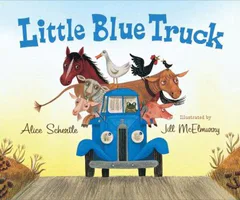 Little Blue TruckAges 2–4 · 5.5 min · 361 wordsFull book page
- Estimated read-aloud time
- about 5.5 minutes
- Words
- 361
- Sentences per spread
- 2
- Re-read tolerance
- 5/5strong repeat appeal
- Vocabulary
- 2/5everyday words
- Ages
- 2–4
Book features rhymes · repeated refrain · join-in questions
Why it worksBlue's greetings establish both the farm animals' sounds and the relationships that matter later. When the self-important dump truck gets stuck, Blue helps first and the animals then answer Blue's call, so the rescue follows directly from the earlier pattern of attention and courtesy.
Worth knowingThe dump truck's lesson is explicit, and the closing moral leaves little ambiguity for a reader to work out. Brown Bear, Brown Bear, What Do You See? offers a purer animal-naming refrain; Little Blue Truck adds a conflict, group rescue and vehicle sound play.
Full book page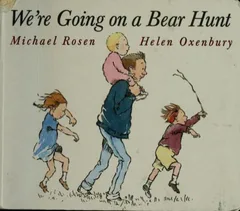 We're Going on a Bear HuntAges 2–5 · 6 min · 410 wordsFull book page
- Estimated read-aloud time
- about 6 minutes
- Words
- 410
- Sentences per spread
- 2
- Re-read tolerance
- 5/5strong repeat appeal
- Vocabulary
- 2/5everyday words
- Ages
- 2–5
Book features repeated refrain · join-in questions
Why it worksThe family crosses grass, river, mud, forest and snowstorm through repeated obstacle language and distinct sound phrases, then reverses the entire route at speed after finding the bear. Movement and memory are built into the same structure.
Worth knowingThe encounter and chase can frighten sensitive listeners, and the energetic return is poorly suited to a final calming read. The Gruffalo uses repeated landscape encounters with verbal problem solving rather than physical escape.
Full book page- Dragons Love TacosAges 3–6 · 7 min · 501 wordsFull book page
- Estimated read-aloud time
- about 7 minutes
- Words
- 501
- Sentences per spread
- 2
- Re-read tolerance
- 5/5strong repeat appeal
- Vocabulary
- 2/5everyday words
- Ages
- 3–6
Book features repeated refrain · join-in questions
Why it worksThe narrator establishes one precise rule—dragons love tacos but cannot tolerate spicy salsa—then places mislabeled salsa at a taco party. The humor and plot both depend on the reader recognizing the warning before the fire-breathing consequence arrives.
Worth knowingThe spicy-salsa mistake leads to fire and a destroyed house before the dragons help rebuild it. If You Give a Mouse a Cookie is the quieter alternative: its consequences form a domestic loop rather than one destructive payoff.
Full book page