Books for 3 Year Olds
Choose between joining a repeated line, following an accumulating problem and explaining what a character knows. These are different reading experiences, even when the books have similar word counts. The selections below make those differences visible and keep quieter options beside the comic and suspenseful ones.


A repeated pattern can do different jobs
In The Gruffalo, the mouse’s repeated encounters become material for a second bluff on the return journey. Room on the Broom adds members to a group that will later act together. If You Give a Mouse a Cookie follows one request into the next until the chain circles back. Choose the first for deception and reversal, the second for accumulation and cooperation, or Mouse for tracing consequences.
The Pigeon asks for participation through a disagreement with the reader. Pete’s White Shoes asks for a response inside an established song-shaped pattern. A child who likes supplying the next line may prefer Pete; one who enjoys arguing with a character may enjoy the Pigeon’s direct appeals. Neither kind of participation requires turning every spread into a comprehension quiz.
Make space for visual storytelling
Rosie’s Walk gives the pictures work that the words do not do. Knuffle Bunny puts a communication problem at the center of its outing. These are useful alternatives to a long rhyming story when the interesting task is identifying what is happening or what someone is trying to say. Pause at a detail the child notices instead of assuming fewer words mean less to discuss.
Keep the character and subject choices broad. A female or male protagonist is one way to find a point of connection, but it does not create a different reading level or make a story suitable only for children of that gender. Choose the particular relationship, joke or problem the reader wants to explore.
Check the emotional turn
The Rabbit Listened organizes different responses to an upsetting event; Grumpy Monkey centers on pressure to stop feeling grumpy; Owl Babies puts waiting for a parent’s return into a story. These books offer different conversational starting points. Use the individual notes to choose the closest situation, and do not present a story as a treatment or a promise that the same difficulty will disappear.
Compare every cover and read-aloud time
Open any book for its details, review and things worth knowing, right here. Read-aloud times are estimates for an unhurried pace, including time for page-turning and looking at pictures. How Owl and Page estimates read-aloud time.
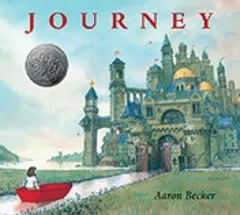 Rosie's WalkAges 2–5 · 2.5 min · 32 wordsFull book page
- Estimated read-aloud time
- about 2.5 minutes
- Words
- 32
- Sentences per spread
- 1
- Re-read tolerance
- 5/5strong repeat appeal
- Vocabulary
- 1/5plain words
- Ages
- 2–5
Book features join-in questions
Why it worksRosie calmly crosses the farm while an unseen fox suffers one accident after another behind her. Minimal text names the route; the pictures supply pursuit, cause and comic timing.
Worth knowingA listener who cannot see the pictures closely receives almost none of the plot. The fox’s repeated injuries are slapstick, and the book does not ask Rosie to recognize the danger.
Full book page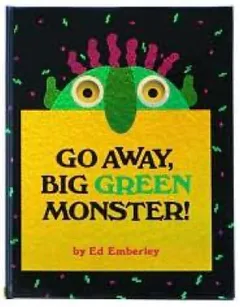 Go Away, Big Green Monster!Ages 2–5 · 3 min · 91 wordsFull book page
- Estimated read-aloud time
- about 3 minutes
- Words
- 91
- Sentences per spread
- 1
- Re-read tolerance
- 5/5strong repeat appeal
- Vocabulary
- 2/5everyday words
- Ages
- 2–5
Book features repeated refrain · join-in questions
Why it worksProgressive die cuts give the child visible control over both constructing and banishing the monster.
Worth knowingThe face becomes intense at the midpoint, and damaged die-cut pages can distort the carefully staged reveal.
Full book page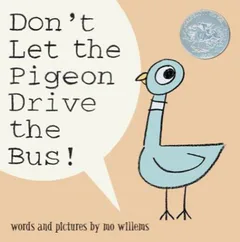 Don't Let the Pigeon Drive the Bus!Ages 2–5 · 3.5 min · 161 wordsFull book page
- Estimated read-aloud time
- about 3.5 minutes
- Words
- 161
- Sentences per spread
- 1
- Re-read tolerance
- 5/5strong repeat appeal
- Vocabulary
- 2/5everyday words
- Ages
- 2–5
Book features repeated refrain · join-in questions
Why it worksPigeon cycles through bargaining, flattery, invented permission, promises and a full-page outburst after the bus driver leaves one clear instruction. Because every appeal faces outward, the listener becomes the person who must hold the boundary.
Worth knowingThe ending redirects Pigeon's desire toward a different vehicle rather than showing him accept the rule. There Is a Bird on Your Head! is the closer choice for two-character problem solving; this book is a one-sided persuasion game.
Full book page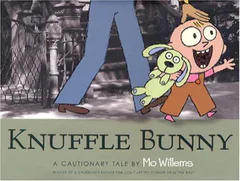 Knuffle Bunny: A Cautionary TaleAges 2–5 · 4 min · 211 wordsFull book page
- Estimated read-aloud time
- about 4 minutes
- Words
- 211
- Sentences per spread
- 2
- Re-read tolerance
- 5/5strong repeat appeal
- Vocabulary
- 2/5everyday words
- Ages
- 2–5
Book features join-in questions
Why it worksA lost comfort object turns the gap between a toddler’s knowledge and an adult’s interpretation into the central problem.
Worth knowingTrixie’s distress is prolonged and Dad becomes frustrated; the recovery is reassuring but not a guide to every communication delay.
Full book page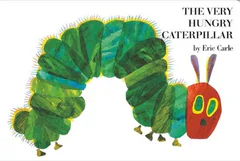 The Very Hungry CaterpillarAges 2–4 · 4 min · 221 wordsFull book page
- Estimated read-aloud time
- about 4 minutes
- Words
- 221
- Sentences per spread
- 1
- Re-read tolerance
- 5/5strong repeat appeal
- Vocabulary
- 2/5everyday words
- Ages
- 2–4
Book features repeated refrain · join-in questions
Why it worksFive weekday spreads add one fruit at a time and one new hole to count; Saturday breaks that measured pattern with ten named foods before Sunday returns to one leaf. The holes, page sizes, days and quantities all carry information rather than serving as decoration.
Worth knowingThe food sequence is a stylized route to metamorphosis, not a factual account of caterpillar feeding or a complete life-cycle explanation. Brown Bear, Brown Bear, What Do You See? is the closer choice when the main task is repeating a fixed spoken pattern rather than tracking change across a week.
Full book page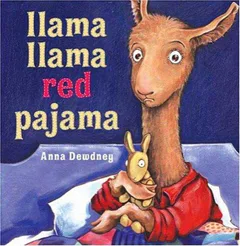 Llama Llama Red PajamaAges 2–4 · 4.5 min · 233 wordsFull book page
- Estimated read-aloud time
- about 4.5 minutes
- Words
- 233
- Sentences per spread
- 2
- Re-read tolerance
- 5/5strong repeat appeal
- Vocabulary
- 2/5everyday words
- Ages
- 2–4
Book features rhymes · repeated refrain · join-in questions
Why it worksBaby Llama's worry rises through a chain of unanswered calls while Mama is occupied downstairs, and the rhyme tightens around that escalation. Mama's return does more than end the crying: she names the continuing connection between them and also sets a limit on the shouting.
Worth knowingThe middle pages dwell on separation panic rather than providing an immediately soothing bedtime script. Goodnight Moon is the quieter alternative for a routine already winding down; this title is more useful when the worry itself needs to be named.
Full book page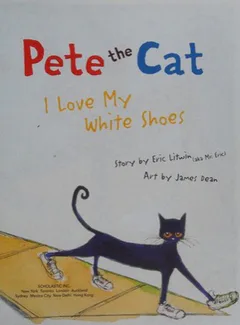 Pete the Cat: I Love My White ShoesAges 2–5 · 4.5 min · 275 wordsFull book page
- Estimated read-aloud time
- about 4.5 minutes
- Words
- 275
- Sentences per spread
- 2
- Re-read tolerance
- 5/5strong repeat appeal
- Vocabulary
- 2/5everyday words
- Ages
- 2–5
Book features repeated refrain · join-in questions
Why it worksPete steps into strawberries, blueberries, mud and water, so each color change has a visible cause before the refrain returns. The publisher also frames the book as a song and asks direct color questions, making it more participatory than a simple story about staying calm.
Worth knowingThe repeated song carries much of the book's structure. Readers who want a plot with rising stakes may find less to discuss than in Rocking in My School Shoes, which moves through several school locations.
Full book page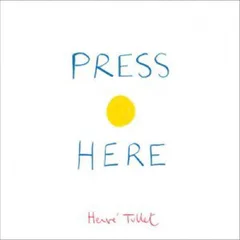 Press HereAges 2–5 · 4.5 min · about 252 wordsFull book page
- Estimated read-aloud time
- about 4.5 minutes
- Words
- 252approximate
- Sentences per spread
- 1
- Re-read tolerance
- 5/5strong repeat appeal
- Vocabulary
- 2/5everyday words
- Ages
- 2–5
Book features repeated refrain · join-in questions
Why it worksPrinted dots appear to respond after the reader presses, shakes, tilts and claps, so the page turn becomes the mechanism connecting instruction and result. The child must remember the requested action and inspect what changed.
Full book page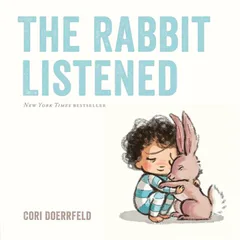 The Rabbit ListenedAges 3–6 · 4.5 min · 296 wordsFull book page
- Estimated read-aloud time
- about 4.5 minutes
- Words
- 296
- Sentences per spread
- 1
- Re-read tolerance
- 4/5good repeat appeal
- Vocabulary
- 2/5everyday words
- Ages
- 3–6
Book features repeated refrain
Why it worksAfter Taylor's block creation collapses, animals successively urge talking, anger, repair, laughter, denial and revenge. The rabbit waits close enough for Taylor to choose those responses in their own time and eventually imagine rebuilding.
Worth knowingThe animals function as clear examples rather than developed characters, and quiet presence is not sufficient for every serious problem. Grumpy Monkey uses comedy to resist forced cheerfulness; this title is more explicit about listening after loss.
Full book page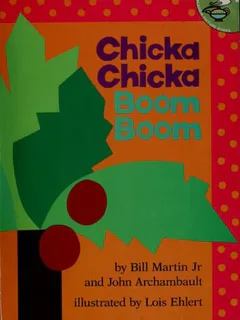 Chicka Chicka Boom BoomAges 2–5 · 5 min · about 300 wordsFull book page
- Estimated read-aloud time
- about 5 minutes
- Words
- 300approximate
- Sentences per spread
- 2
- Re-read tolerance
- 5/5strong repeat appeal
- Vocabulary
- 2/5everyday words
- Ages
- 2–5
Book features rhymes · repeated refrain · join-in questions
Why it worksLowercase letters climb the coconut tree in alphabetical order until the crowded tree bends and the whole group falls. The uppercase relatives then arrive to collect them, while Lois Ehlert's bold shapes keep individual letters legible inside a fast chant.
Worth knowingThe alphabet sequence is memorable, but the book does not teach letter sounds or explain why upper- and lowercase forms correspond. Brown Bear, Brown Bear, What Do You See? uses a similarly dependable spoken frame for color-and-animal prediction rather than letter order.
Full book page
See all 20 books
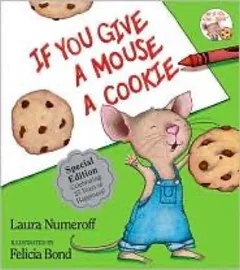 If You Give a Mouse a CookieAges 3–5 · 5 min · 291 wordsFull book page
- Estimated read-aloud time
- about 5 minutes
- Words
- 291
- Sentences per spread
- 1
- Re-read tolerance
- 5/5strong repeat appeal
- Vocabulary
- 2/5everyday words
- Ages
- 3–5
Book features repeated refrain · join-in questions
Why it worksEach request creates the condition for the next—milk needs a straw, the straw leads to a mirror, and later actions circle back to another cookie. The value is the closed causal chain, not a lesson that every real request escalates in the same way.
Worth knowingThe boy continually serves the mouse's requests without setting a limit. Dragons Love Tacos uses a single ignored food warning and one large consequence instead of a circular request chain.
Full book page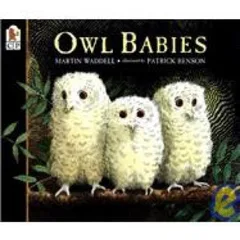 Owl BabiesAges 2–5 · 5 min · 325 wordsFull book page
- Estimated read-aloud time
- about 5 minutes
- Words
- 325
- Sentences per spread
- 1
- Re-read tolerance
- 5/5strong repeat appeal
- Vocabulary
- 2/5everyday words
- Ages
- 2–5
Book features repeated refrain · join-in questions
Why it worksSarah, Percy and Bill respond differently when their mother is absent, and their repeated exchange grows from explanation to huddling to Bill's blunt wish before her return.
Worth knowingThe mother leaves without explanation and the night setting can intensify separation worry. Llama Llama Misses Mama shows a full school day and gradual participation before reunion.
Full book page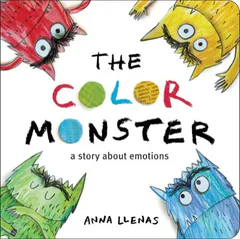 The Color Monster: A Story About EmotionsAges 3–5 · 5 min · about 320 wordsFull book page
- Estimated read-aloud time
- about 5 minutes
- Words
- 320approximate
- Sentences per spread
- 2
- Re-read tolerance
- 4/5good repeat appeal
- Vocabulary
- 2/5everyday words
- Ages
- 3–5
Book features repeated refrain · join-in questions
Why it worksThe monster's mixed-up colors are separated into jars for happiness, sadness, anger, fear and calm. The visual sorting gives a child labels and contrasts, especially when verbal explanation alone feels too abstract.
Worth knowingFeelings do not always separate cleanly or belong to one universal color, and the final new feeling is left for inference. In My Heart describes emotions through changing bodily metaphors rather than a sorting system.
Full book page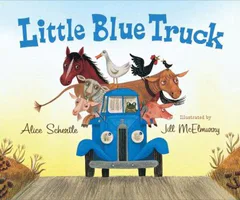 Little Blue TruckAges 2–4 · 5.5 min · 361 wordsFull book page
- Estimated read-aloud time
- about 5.5 minutes
- Words
- 361
- Sentences per spread
- 2
- Re-read tolerance
- 5/5strong repeat appeal
- Vocabulary
- 2/5everyday words
- Ages
- 2–4
Book features rhymes · repeated refrain · join-in questions
Why it worksBlue's greetings establish both the farm animals' sounds and the relationships that matter later. When the self-important dump truck gets stuck, Blue helps first and the animals then answer Blue's call, so the rescue follows directly from the earlier pattern of attention and courtesy.
Worth knowingThe dump truck's lesson is explicit, and the closing moral leaves little ambiguity for a reader to work out. Brown Bear, Brown Bear, What Do You See? offers a purer animal-naming refrain; Little Blue Truck adds a conflict, group rescue and vehicle sound play.
Full book page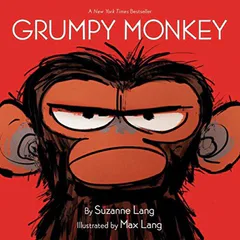 Grumpy MonkeyAges 3–6 · 6 min · 476 wordsFull book page
- Estimated read-aloud time
- about 6 minutes
- Words
- 476
- Sentences per spread
- 2
- Re-read tolerance
- 4/5good repeat appeal
- Vocabulary
- 2/5everyday words
- Ages
- 3–6
Book features repeated refrain
Why it worksJim Panzee's friends prescribe smiles, posture changes, dancing and other fixes while his body continues to show irritation. Norman's quiet admission that he also feels bad finally gives Jim company without demanding improvement.
Worth knowingThe animals' repeated pressure may feel overwhelming, and the story does not identify a cause for Jim's mood. The Rabbit Listened offers a quieter account of unwanted advice after a clear loss.
Full book page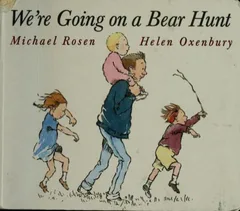 We're Going on a Bear HuntAges 2–5 · 6 min · 410 wordsFull book page
- Estimated read-aloud time
- about 6 minutes
- Words
- 410
- Sentences per spread
- 2
- Re-read tolerance
- 5/5strong repeat appeal
- Vocabulary
- 2/5everyday words
- Ages
- 2–5
Book features repeated refrain · join-in questions
Why it worksThe family crosses grass, river, mud, forest and snowstorm through repeated obstacle language and distinct sound phrases, then reverses the entire route at speed after finding the bear. Movement and memory are built into the same structure.
Worth knowingThe encounter and chase can frighten sensitive listeners, and the energetic return is poorly suited to a final calming read. The Gruffalo uses repeated landscape encounters with verbal problem solving rather than physical escape.
Full book page Goodnight, Goodnight, Construction SiteAges 2–5 · 6.5 min · 526 wordsFull book page
- Estimated read-aloud time
- about 6.5 minutes
- Words
- 526
- Sentences per spread
- 2
- Re-read tolerance
- 4/5good repeat appeal
- Vocabulary
- 2/5everyday words
- Ages
- 2–5
Book features rhymes · repeated refrain
Why it worksEach machine finishes one recognizable job before performing a machine-specific bedtime routine, linking technical vocabulary to a repeated wind-down pattern.
Full book page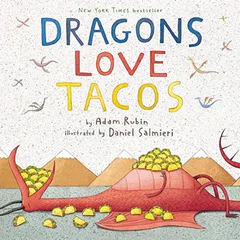 Dragons Love TacosAges 3–6 · 7 min · 501 wordsFull book page
- Estimated read-aloud time
- about 7 minutes
- Words
- 501
- Sentences per spread
- 2
- Re-read tolerance
- 5/5strong repeat appeal
- Vocabulary
- 2/5everyday words
- Ages
- 3–6
Book features repeated refrain · join-in questions
Why it worksThe narrator establishes one precise rule—dragons love tacos but cannot tolerate spicy salsa—then places mislabeled salsa at a taco party. The humor and plot both depend on the reader recognizing the warning before the fire-breathing consequence arrives.
Worth knowingThe spicy-salsa mistake leads to fire and a destroyed house before the dragons help rebuild it. If You Give a Mouse a Cookie is the quieter alternative: its consequences form a domestic loop rather than one destructive payoff.
Full book page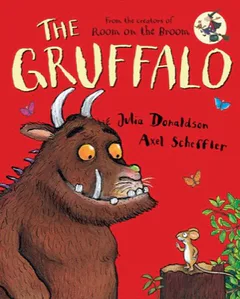 The GruffaloAges 3–6 · 8.5 min · 687 wordsFull book page
- Estimated read-aloud time
- about 8.5 minutes
- Words
- 687
- Sentences per spread
- 3
- Re-read tolerance
- 5/5strong repeat appeal
- Vocabulary
- 3/5a few new words
- Ages
- 3–6
Book features rhymes · repeated refrain · join-in questions
Why it worksThe mouse invents a monster to deter a fox, owl and snake, then meets that monster and reuses the same encounters as proof of his own supposed power. The repeated predator sequence first builds the lie, then lets the mouse reverse the danger through quick thinking.
Worth knowingThe story includes several animals intending to eat the mouse and a monster described through tusks, claws, jaws and a poisonous wart. Compared with Room on the Broom's cooperative group rescue, this is a solitary trickster story built around threat and deception.
Full book page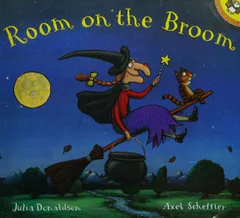 Room on the BroomAges 3–6 · 10 min · 834 wordsFull book page
- Estimated read-aloud time
- about 10 minutes
- Words
- 834
- Sentences per spread
- 3
- Re-read tolerance
- 5/5strong repeat appeal
- Vocabulary
- 3/5a few new words
- Ages
- 3–6
Book features rhymes · repeated refrain · join-in questions
Why it worksThe witch repeatedly makes room for a dog, bird and frog after each animal retrieves something she has lost. Their additions first overload the broom, then make the later dragon rescue possible, linking generosity to a concrete return rather than a general friendship message.
Worth knowingThe broom snaps and a dragon threatens to eat the witch. Unlike The Gruffalo's solitary bluff, the solution depends on the animals combining into one frightening shape.
Full book page