Books for 4 Year Olds
This shelf focuses on stories where the interesting work is noticing a reversal, following another viewpoint or connecting a picture with something the words leave unstated. Choose a familiar structure with one new demand, rather than assuming that a fourth birthday calls for more pages.


Choose the new demand in the story
Zog links repeated school years with skills that do not all go as planned and then changes the characters’ expected roles. The Snail and the Whale changes the scale of its journey when a very small traveler can help a much larger one. The Gruffalo asks the reader to keep track of a character’s deliberate bluff. These are different steps beyond simply predicting the next repeated phrase.
You can share a longer story without asking the child to read it independently. Let the adult carry unfamiliar vocabulary and the child follow an event, anticipate a reversal or explain a picture. The choice of a read-aloud and the choice of a phonics practice book serve different tasks.
Read what the narrator misses
I Want My Hat Back, This Is Not My Hat and Sam and Dave Dig a Hole all invite attention to information visible in the pictures or outside a character’s understanding. They are useful when the appeal is noticing something rather than listening to a narrator explain everything. Read the individual cautions: comic understatement can coexist with theft, threatening implications or an unresolved ending.
For a gentler contrast, Lost and Found makes a mistaken interpretation of another character’s need part of its journey. Choosing between these titles is a choice about the kind of misunderstanding you want to share, not a ranking of how clever a child should be.
Find the right school perspective
School’s First Day of School gives the building a viewpoint. The Pigeon Has to Go to School uses a character’s direct objections. We Don’t Eat Our Classmates makes a social problem comic through an impossible dinosaur premise. Match the perspective to the conversation you want: the unfamiliar place, the objections about going, or interacting with others. A school label alone does not tell you which of these a book addresses.
Compare every cover and read-aloud time
Open any book for its details, review and things worth knowing, right here. Read-aloud times are estimates for an unhurried pace, including time for page-turning and looking at pictures. How Owl and Page estimates read-aloud time.
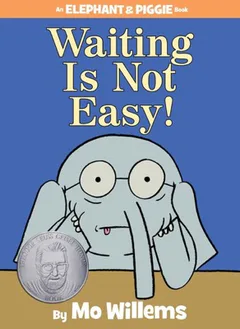 Waiting Is Not Easy!Ages 3–6 · 3 min · 197 wordsFull book page
- Estimated read-aloud time
- about 3 minutes
- Words
- 197
- Sentences per spread
- 1
- Re-read tolerance
- 5/5strong repeat appeal
- Vocabulary
- 1/5plain words
- Ages
- 3–6
Book features repeated refrain
Why it worksPiggie promises a surprise but will not reveal it early, and Gerald's repeated groans expand as daylight gives way to night. The final starry spread changes the pace and visual scale of the book, so the payoff depends on elapsed time rather than the escalating mishap used in There Is a Bird on Your Head!.
Worth knowingThe surprise is intentionally delayed until the closing night-sky scene. Readers wanting continuous action get repetition and anticipation instead.
Full book page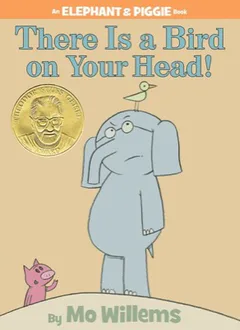 There Is a Bird on Your Head!Ages 3–6 · 3.5 min · 242 wordsFull book page
- Estimated read-aloud time
- about 3.5 minutes
- Words
- 242
- Sentences per spread
- 1
- Re-read tolerance
- 5/5strong repeat appeal
- Vocabulary
- 1/5plain words
- Ages
- 3–6
Book features repeated refrain
Why it worksGerald's problem grows visibly from one bird to two, then a nest and eggs, while Piggie's short replies keep the solution in dialogue. The color-coded speech bubbles also make the two roles easy to separate; Waiting Is Not Easy uses the same pair for an emotional time arc instead of an escalating physical predicament.
Worth knowingThe plot depends on Gerald not directly asking the birds to move until Piggie suggests it. Readers looking for a more independent problem-solving arc may prefer another Elephant & Piggie title.
Full book page This Is Not My HatAges 3–6 · 4 min · 205 wordsFull book page
- Estimated read-aloud time
- about 4 minutes
- Words
- 205
- Sentences per spread
- 1
- Re-read tolerance
- 5/5strong repeat appeal
- Vocabulary
- 2/5everyday words
- Ages
- 3–6
Book features join-in questions
Why it worksAn unreliable monologue runs against visual evidence, requiring readers to build the true chase and infer the ending.
Worth knowingThe small fish likely faces lethal retaliation, and the ambiguity can be disturbing rather than funny for some readers.
Full book page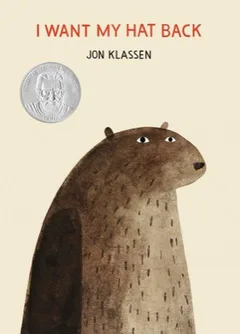 I Want My Hat BackAges 3–6 · 4.5 min · 253 wordsFull book page
- Estimated read-aloud time
- about 4.5 minutes
- Words
- 253
- Sentences per spread
- 1
- Re-read tolerance
- 5/5strong repeat appeal
- Vocabulary
- 2/5everyday words
- Ages
- 3–6
Book features repeated refrain · join-in questions
Why it worksThe pictures disclose the culprit before the protagonist knows, creating sustained dramatic irony and a morally ambiguous payoff.
Worth knowingThe ending strongly implies Bear ate Rabbit; adults should preview it for children sensitive to predation or punishment.
Full book page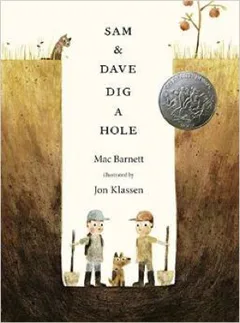 Sam & Dave Dig a HoleAges 3–6 · 4.5 min · 275 wordsFull book page
- Estimated read-aloud time
- about 4.5 minutes
- Words
- 275
- Sentences per spread
- 1
- Re-read tolerance
- 5/5strong repeat appeal
- Vocabulary
- 2/5everyday words
- Ages
- 3–6
Book features repeated refrain · join-in questions
Why it worksThe reader sees missed treasures and altered final details that the protagonists never acknowledge, making close observation the real discovery.
Worth knowingThe digging is unsafe to imitate, and the ambiguous ending offers no single confirmed explanation for where the boys arrive.
Full book page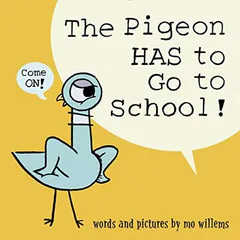 The Pigeon HAS to Go to School!Ages 3–5 · 4.5 min · 240 wordsFull book page
- Estimated read-aloud time
- about 4.5 minutes
- Words
- 240
- Sentences per spread
- 1
- Re-read tolerance
- 4/5good repeat appeal
- Vocabulary
- 2/5everyday words
- Ages
- 3–5
Book features repeated refrain · join-in questions
Why it worksPigeon states a series of distinct objections—he already knows everything, might dislike school, might be disliked by the teacher, and might learn too much—before reconsidering what school makes possible. Direct address lets a listener answer each claim instead of waiting passively for reassurance.
Worth knowingThe change of mind comes through comic argument rather than a tour of an actual school day. Pete the Cat: Rocking in My School Shoes is the more concrete alternative for naming locations such as the library, lunchroom and playground.
Full book page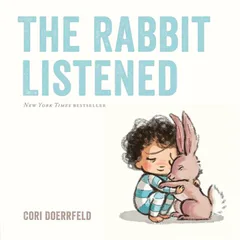 The Rabbit ListenedAges 3–6 · 4.5 min · 296 wordsFull book page
- Estimated read-aloud time
- about 4.5 minutes
- Words
- 296
- Sentences per spread
- 1
- Re-read tolerance
- 4/5good repeat appeal
- Vocabulary
- 2/5everyday words
- Ages
- 3–6
Book features repeated refrain
Why it worksAfter Taylor's block creation collapses, animals successively urge talking, anger, repair, laughter, denial and revenge. The rabbit waits close enough for Taylor to choose those responses in their own time and eventually imagine rebuilding.
Worth knowingThe animals function as clear examples rather than developed characters, and quiet presence is not sufficient for every serious problem. Grumpy Monkey uses comedy to resist forced cheerfulness; this title is more explicit about listening after loss.
Full book page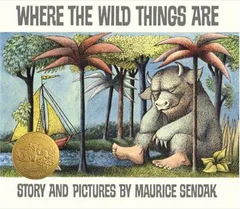 Where the Wild Things AreAges 3–6 · 5 min · 336 wordsFull book page
- Estimated read-aloud time
- about 5 minutes
- Words
- 336
- Sentences per spread
- 1
- Re-read tolerance
- 5/5strong repeat appeal
- Vocabulary
- 3/5a few new words
- Ages
- 3–6
Why it worksMax's bedroom grows into a forest after he is sent away, and the pictures expand until the wild rumpus occupies three wordless spreads. He leaves the monsters by choice when he wants to be loved, then finds his supper waiting and still hot.
Worth knowingThe monsters, punishment and threat to eat Max may unsettle younger listeners. When Sophie Gets Angry—Really, Really Angry... keeps its emotional journey in a recognizable home-and-nature setting; Max's version depends on fantasy and an unresolved parent-child conflict.
Full book page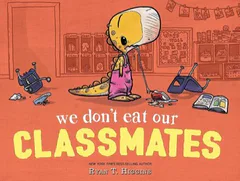 We Don't Eat Our ClassmatesAges 4–6 · 5.5 min · 409 wordsFull book page
- Estimated read-aloud time
- about 5.5 minutes
- Words
- 409
- Sentences per spread
- 2
- Re-read tolerance
- 5/5strong repeat appeal
- Vocabulary
- 3/5a few new words
- Ages
- 4–6
Book features repeated refrain
Why it worksPenelope repeatedly eats classmates and returns them after correction, but understanding changes only when the class goldfish bites her. The reversal makes bodily consequence—not an adult lecture—the route to empathy.
Worth knowingClassmates are swallowed and expelled for comedy, and the fish’s bite is the turning point. Sensitive readers may find the predation more alarming than the bright school setting suggests.
Full book page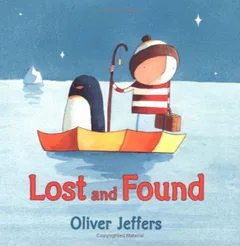 Lost and FoundAges 3–6 · 6 min · 471 wordsFull book page
- Estimated read-aloud time
- about 6 minutes
- Words
- 471
- Sentences per spread
- 2
- Re-read tolerance
- 5/5strong repeat appeal
- Vocabulary
- 2/5everyday words
- Ages
- 3–6
Why it worksA boy interprets a penguin’s arrival as being lost, rows it to the South Pole and only then recognizes that companionship—not geography—was the unmet need. The mistaken assumption drives the entire journey.
Worth knowingThe outward voyage sustains loneliness and separation before the reunion. The sparse text also leaves motives to be inferred from the pictures rather than explained directly.
Full book page
See all 20 books
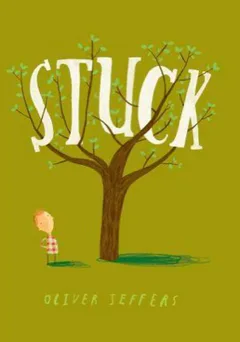 StuckAges 3–6 · 6.5 min · 493 wordsFull book page
- Estimated read-aloud time
- about 6.5 minutes
- Words
- 493
- Sentences per spread
- 2
- Re-read tolerance
- 5/5strong repeat appeal
- Vocabulary
- 2/5everyday words
- Ages
- 3–6
Book features repeated refrain · join-in questions
Why it worksFloyd throws progressively less plausible objects at a kite in a tree until shoes, animals, a whale and even firefighters are caught. The comedy depends on remembering the growing inventory and noticing that escalation never improves the method.
Worth knowingFloyd does not learn a careful problem-solving process, and the rescue workers also become part of the joke. Treat the book as absurd escalation rather than a model for getting objects down safely.
Full book page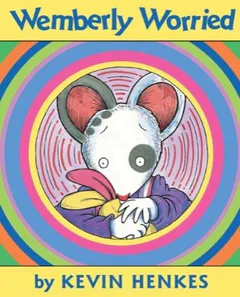 Wemberly WorriedAges 4–6 · 6.5 min · 525 wordsFull book page
- Estimated read-aloud time
- about 6.5 minutes
- Words
- 525
- Sentences per spread
- 2
- Re-read tolerance
- 3/5holds up
- Vocabulary
- 3/5a few new words
- Ages
- 4–6
Book features repeated refrain
Why it worksWemberly's worries attach to small concrete possibilities long before school, then multiply around the new setting. Meeting Jewel does not cure worry; it gives her a companion whose similar concerns make participation possible.
Worth knowingThe long catalogue of anxieties may supply new ideas to a highly suggestible listener. The Kissing Hand offers one compact separation ritual, while Wemberly focuses on recognition and companionship.
Full book page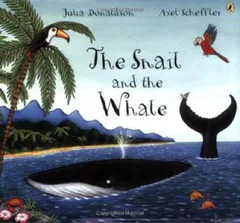 The Snail and the WhaleAges 4–6 · 8 min · 696 wordsFull book page
- Estimated read-aloud time
- about 8 minutes
- Words
- 696
- Sentences per spread
- 3
- Re-read tolerance
- 4/5good repeat appeal
- Vocabulary
- 4/5stretching
- Ages
- 4–6
Book features rhymes · repeated refrain
Why it worksThe snail chooses travel, sees contrasting landscapes from the whale's tail, then responds when the whale is stranded by writing a message for people at a school. The rescue reverses the apparent size imbalance: the smallest character supplies the actionable plan.
Worth knowingThe journey covers multiple settings before the beaching and rescue, so it is less refrain-driven than The Gruffalo. Stick Man also travels far from home, but his movement is forced and episodic rather than a chosen expedition.
Full book page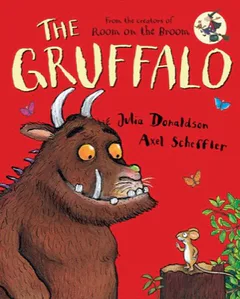 The GruffaloAges 3–6 · 8.5 min · 687 wordsFull book page
- Estimated read-aloud time
- about 8.5 minutes
- Words
- 687
- Sentences per spread
- 3
- Re-read tolerance
- 5/5strong repeat appeal
- Vocabulary
- 3/5a few new words
- Ages
- 3–6
Book features rhymes · repeated refrain · join-in questions
Why it worksThe mouse invents a monster to deter a fox, owl and snake, then meets that monster and reuses the same encounters as proof of his own supposed power. The repeated predator sequence first builds the lie, then lets the mouse reverse the danger through quick thinking.
Worth knowingThe story includes several animals intending to eat the mouse and a monster described through tusks, claws, jaws and a poisonous wart. Compared with Room on the Broom's cooperative group rescue, this is a solitary trickster story built around threat and deception.
Full book page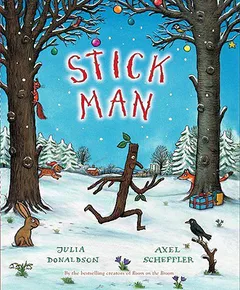 Stick ManAges 3–6 · 9 min · 731 wordsFull book page
- Estimated read-aloud time
- about 9 minutes
- Words
- 731
- Sentences per spread
- 3
- Re-read tolerance
- 4/5good repeat appeal
- Vocabulary
- 3/5a few new words
- Ages
- 3–6
Book features rhymes · repeated refrain · join-in questions
Why it worksEach new character mistakes Stick Man for an object—a fetch stick, flag mast, sword, hook or firewood—while his repeated self-description keeps his identity and family goal visible. The changing seasons give the accidental journey a clear duration before Santa provides the route home.
Worth knowingSeparation from his family occupies most of the story, and the final mistaken use puts him beside a lit fireplace. The Snail and the Whale is a better counterpart when the desired journey is chosen rather than imposed.
Full book page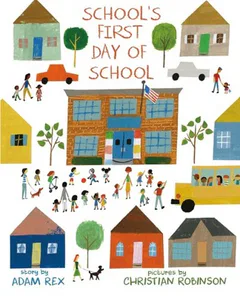 School's First Day of SchoolAges 4–6 · 9.5 min · about 852 wordsFull book page
- Estimated read-aloud time
- about 9.5 minutes
- Words
- 852approximate
- Sentences per spread
- 3
- Re-read tolerance
- 4/5good repeat appeal
- Vocabulary
- 3/5a few new words
- Ages
- 4–6
Why it worksFrederick Douglass Elementary begins uncertain about the children, reacts to noise and mess, and gradually discovers what a school can do with them. Giving the building the anxious viewpoint lets the child observe first-day worry from a safer distance.
Full book page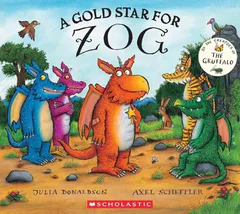 ZogAges 3–6 · 9.5 min · 812 wordsFull book page
- Estimated read-aloud time
- about 9.5 minutes
- Words
- 812
- Sentences per spread
- 3
- Re-read tolerance
- 4/5good repeat appeal
- Vocabulary
- 3/5a few new words
- Ages
- 3–6
Book features rhymes · repeated refrain · join-in questions
Why it worksMadam Dragon's curriculum moves through flying, roaring, fire-breathing and princess capture, with Zog's accidents and the girl's first aid recurring between tests. The final encounter changes the assignment: the princess wants to be a doctor, and Zog becomes transport for a flying medical team.
Worth knowingThe US edition is titled A Gold Star for Zog, while UK listings use Zog. Compared with Rocking in My School Shoes, this is a multi-year fantasy curriculum and career reversal rather than a tour of one ordinary school day.
Full book page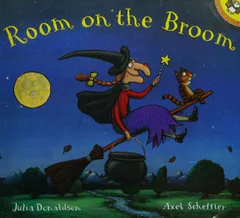 Room on the BroomAges 3–6 · 10 min · 834 wordsFull book page
- Estimated read-aloud time
- about 10 minutes
- Words
- 834
- Sentences per spread
- 3
- Re-read tolerance
- 5/5strong repeat appeal
- Vocabulary
- 3/5a few new words
- Ages
- 3–6
Book features rhymes · repeated refrain · join-in questions
Why it worksThe witch repeatedly makes room for a dog, bird and frog after each animal retrieves something she has lost. Their additions first overload the broom, then make the later dragon rescue possible, linking generosity to a concrete return rather than a general friendship message.
Worth knowingThe broom snaps and a dragon threatens to eat the witch. Unlike The Gruffalo's solitary bluff, the solution depends on the animals combining into one frightening shape.
Full book page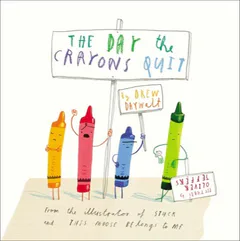 The Day the Crayons QuitAges 4–8 · 11 min · 999 wordsFull book page
- Estimated read-aloud time
- about 11 minutes
- Words
- 999
- Sentences per spread
- 4
- Re-read tolerance
- 5/5strong repeat appeal
- Vocabulary
- 3/5a few new words
- Ages
- 4–8
Why it worksDuncan receives separate letters from crayons objecting to overuse, neglect, outlines and disputed color roles. The document structure makes each complaint a distinct point of view before his final drawing answers them collectively.
Worth knowingThe many letters make this longer than a simple color book, and several jokes rely on understanding conventional coloring rules. It is easy to split across sittings, but the final response works best after enough complaints are known.
Full book page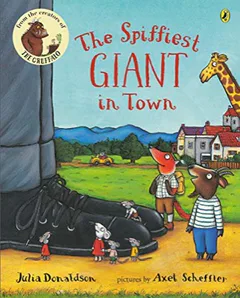 The Spiffiest Giant in TownAges 4–8 · 12 min · 1,074 wordsFull book page
- Estimated read-aloud time
- about 12 minutes
- Words
- 1,074
- Sentences per spread
- 3
- Re-read tolerance
- 4/5good repeat appeal
- Vocabulary
- 3/5a few new words
- Ages
- 4–8
Book features rhymes · repeated refrain · join-in questions
Why it worksEach item of a makeover becomes a practical gift, and the cumulative song preserves the chain of needs and choices.
Worth knowingGeorge gives away everything he just bought; discuss boundaries so generosity is not equated with total self-denial.
Full book page