Books Like If You Give a Mouse a Cookie
The key device in If You Give a Mouse a Cookie is a request that produces the next request until the chain returns to its starting point. Choose an alternative by how its events connect. Repetition, direct participation and circular causation are related experiences, but they are not the same structure.


Our top picks
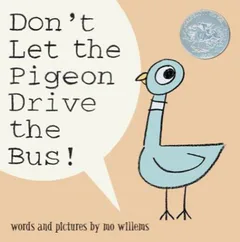 Don't Let the Pigeon Drive the Bus!Ages 2–5 · 3.5 min · 161 wordsFull book page
- Estimated read-aloud time
- about 3.5 minutes
- Words
- 161
- Sentences per spread
- 1
- Re-read tolerance
- 5/5strong repeat appeal
- Vocabulary
- 2/5everyday words
- Ages
- 2–5
Book features repeated refrain · join-in questions
Why it worksPigeon cycles through bargaining, flattery, invented permission, promises and a full-page outburst after the bus driver leaves one clear instruction. Because every appeal faces outward, the listener becomes the person who must hold the boundary.
Worth knowingThe ending redirects Pigeon's desire toward a different vehicle rather than showing him accept the rule. There Is a Bird on Your Head! is the closer choice for two-character problem solving; this book is a one-sided persuasion game.
Full book page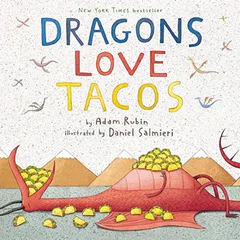 Dragons Love TacosAges 3–6 · 7 min · 501 wordsFull book page
- Estimated read-aloud time
- about 7 minutes
- Words
- 501
- Sentences per spread
- 2
- Re-read tolerance
- 5/5strong repeat appeal
- Vocabulary
- 2/5everyday words
- Ages
- 3–6
Book features repeated refrain · join-in questions
Why it worksThe narrator establishes one precise rule—dragons love tacos but cannot tolerate spicy salsa—then places mislabeled salsa at a taco party. The humor and plot both depend on the reader recognizing the warning before the fire-breathing consequence arrives.
Worth knowingThe spicy-salsa mistake leads to fire and a destroyed house before the dragons help rebuild it. If You Give a Mouse a Cookie is the quieter alternative: its consequences form a domestic loop rather than one destructive payoff.
Full book page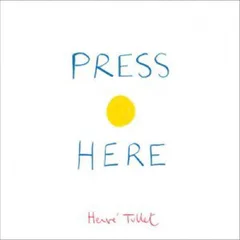 Press HereAges 2–5 · 4.5 min · about 252 wordsFull book page
- Estimated read-aloud time
- about 4.5 minutes
- Words
- 252approximate
- Sentences per spread
- 1
- Re-read tolerance
- 5/5strong repeat appeal
- Vocabulary
- 2/5everyday words
- Ages
- 2–5
Book features repeated refrain · join-in questions
Why it worksPrinted dots appear to respond after the reader presses, shakes, tilts and claps, so the page turn becomes the mechanism connecting instruction and result. The child must remember the requested action and inspect what changed.
Full book page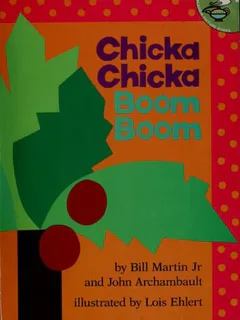 Chicka Chicka Boom BoomAges 2–5 · 5 min · about 300 wordsFull book page
- Estimated read-aloud time
- about 5 minutes
- Words
- 300approximate
- Sentences per spread
- 2
- Re-read tolerance
- 5/5strong repeat appeal
- Vocabulary
- 2/5everyday words
- Ages
- 2–5
Book features rhymes · repeated refrain · join-in questions
Why it worksLowercase letters climb the coconut tree in alphabetical order until the crowded tree bends and the whole group falls. The uppercase relatives then arrive to collect them, while Lois Ehlert's bold shapes keep individual letters legible inside a fast chant.
Worth knowingThe alphabet sequence is memorable, but the book does not teach letter sounds or explain why upper- and lowercase forms correspond. Brown Bear, Brown Bear, What Do You See? uses a similarly dependable spoken frame for color-and-animal prediction rather than letter order.
Full book page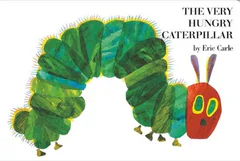 The Very Hungry CaterpillarAges 2–4 · 4 min · 221 wordsFull book page
- Estimated read-aloud time
- about 4 minutes
- Words
- 221
- Sentences per spread
- 1
- Re-read tolerance
- 5/5strong repeat appeal
- Vocabulary
- 2/5everyday words
- Ages
- 2–4
Book features repeated refrain · join-in questions
Why it worksFive weekday spreads add one fruit at a time and one new hole to count; Saturday breaks that measured pattern with ten named foods before Sunday returns to one leaf. The holes, page sizes, days and quantities all carry information rather than serving as decoration.
Worth knowingThe food sequence is a stylized route to metamorphosis, not a factual account of caterpillar feeding or a complete life-cycle explanation. Brown Bear, Brown Bear, What Do You See? is the closer choice when the main task is repeating a fixed spoken pattern rather than tracking change across a week.
Full book page
Choose the kind of cause and effect
Dragons Love Tacos builds its comedy around a preference and a rule with a consequence. The Very Hungry Caterpillar connects days, quantities and a later change. Little Blue Truck connects a problem with the help needed to resolve it. These can suit a reader who likes seeing one event lead to another, but none reproduces Mouse’s chain of escalating requests exactly.
Pete’s White Shoes instead resets a recurring response after each transformation. Choose it when the repeated return is what the listener enjoys, rather than when you need every new incident to arise from the previous request.
Change the reader’s role
The Pigeon addresses the reader with requests that can be refused. Press Here asks for an action before the following printed result. In Mouse, the reader mainly follows the consequences of a host agreeing. Compare whether you want to argue, act or trace what someone else does.
Chicka Chicka Boom Boom and We’re Going on a Bear Hunt make rhythm and recurring movement prominent. They are useful changes of direction for a reader who likes anticipating a phrase, but their sequences are not simply another cookie-style chain.
Notice where the ending sends you
A circular ending can invite revisiting the opening because the last event makes the first event newly relevant. Other stories close with a solved problem, a journey home or a recurring phrase. Asking what changed and what returned is a way to compare these books using their actual construction, without making every reading a search for a moral. The Mouse title itself is excluded from the recommendations.
Compare every cover and read-aloud time
Open any book for its details, review and things worth knowing, right here. Read-aloud times are estimates for an unhurried pace, including time for page-turning and looking at pictures. How Owl and Page estimates read-aloud time.
- Don't Let the Pigeon Drive the Bus!Ages 2–5 · 3.5 min · 161 wordsFull book page
- Estimated read-aloud time
- about 3.5 minutes
- Words
- 161
- Sentences per spread
- 1
- Re-read tolerance
- 5/5strong repeat appeal
- Vocabulary
- 2/5everyday words
- Ages
- 2–5
Book features repeated refrain · join-in questions
Why it worksPigeon cycles through bargaining, flattery, invented permission, promises and a full-page outburst after the bus driver leaves one clear instruction. Because every appeal faces outward, the listener becomes the person who must hold the boundary.
Worth knowingThe ending redirects Pigeon's desire toward a different vehicle rather than showing him accept the rule. There Is a Bird on Your Head! is the closer choice for two-character problem solving; this book is a one-sided persuasion game.
Full book page- The Very Hungry CaterpillarAges 2–4 · 4 min · 221 wordsFull book page
- Estimated read-aloud time
- about 4 minutes
- Words
- 221
- Sentences per spread
- 1
- Re-read tolerance
- 5/5strong repeat appeal
- Vocabulary
- 2/5everyday words
- Ages
- 2–4
Book features repeated refrain · join-in questions
Why it worksFive weekday spreads add one fruit at a time and one new hole to count; Saturday breaks that measured pattern with ten named foods before Sunday returns to one leaf. The holes, page sizes, days and quantities all carry information rather than serving as decoration.
Worth knowingThe food sequence is a stylized route to metamorphosis, not a factual account of caterpillar feeding or a complete life-cycle explanation. Brown Bear, Brown Bear, What Do You See? is the closer choice when the main task is repeating a fixed spoken pattern rather than tracking change across a week.
Full book page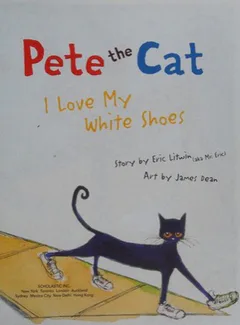 Pete the Cat: I Love My White ShoesAges 2–5 · 4.5 min · 275 wordsFull book page
- Estimated read-aloud time
- about 4.5 minutes
- Words
- 275
- Sentences per spread
- 2
- Re-read tolerance
- 5/5strong repeat appeal
- Vocabulary
- 2/5everyday words
- Ages
- 2–5
Book features repeated refrain · join-in questions
Why it worksPete steps into strawberries, blueberries, mud and water, so each color change has a visible cause before the refrain returns. The publisher also frames the book as a song and asks direct color questions, making it more participatory than a simple story about staying calm.
Worth knowingThe repeated song carries much of the book's structure. Readers who want a plot with rising stakes may find less to discuss than in Rocking in My School Shoes, which moves through several school locations.
Full book page- Press HereAges 2–5 · 4.5 min · about 252 wordsFull book page
- Estimated read-aloud time
- about 4.5 minutes
- Words
- 252approximate
- Sentences per spread
- 1
- Re-read tolerance
- 5/5strong repeat appeal
- Vocabulary
- 2/5everyday words
- Ages
- 2–5
Book features repeated refrain · join-in questions
Why it worksPrinted dots appear to respond after the reader presses, shakes, tilts and claps, so the page turn becomes the mechanism connecting instruction and result. The child must remember the requested action and inspect what changed.
Full book page- Chicka Chicka Boom BoomAges 2–5 · 5 min · about 300 wordsFull book page
- Estimated read-aloud time
- about 5 minutes
- Words
- 300approximate
- Sentences per spread
- 2
- Re-read tolerance
- 5/5strong repeat appeal
- Vocabulary
- 2/5everyday words
- Ages
- 2–5
Book features rhymes · repeated refrain · join-in questions
Why it worksLowercase letters climb the coconut tree in alphabetical order until the crowded tree bends and the whole group falls. The uppercase relatives then arrive to collect them, while Lois Ehlert's bold shapes keep individual letters legible inside a fast chant.
Worth knowingThe alphabet sequence is memorable, but the book does not teach letter sounds or explain why upper- and lowercase forms correspond. Brown Bear, Brown Bear, What Do You See? uses a similarly dependable spoken frame for color-and-animal prediction rather than letter order.
Full book page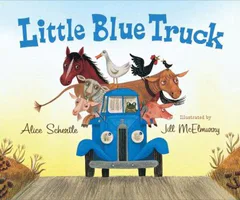 Little Blue TruckAges 2–4 · 5.5 min · 361 wordsFull book page
- Estimated read-aloud time
- about 5.5 minutes
- Words
- 361
- Sentences per spread
- 2
- Re-read tolerance
- 5/5strong repeat appeal
- Vocabulary
- 2/5everyday words
- Ages
- 2–4
Book features rhymes · repeated refrain · join-in questions
Why it worksBlue's greetings establish both the farm animals' sounds and the relationships that matter later. When the self-important dump truck gets stuck, Blue helps first and the animals then answer Blue's call, so the rescue follows directly from the earlier pattern of attention and courtesy.
Worth knowingThe dump truck's lesson is explicit, and the closing moral leaves little ambiguity for a reader to work out. Brown Bear, Brown Bear, What Do You See? offers a purer animal-naming refrain; Little Blue Truck adds a conflict, group rescue and vehicle sound play.
Full book page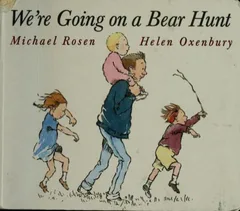 We're Going on a Bear HuntAges 2–5 · 6 min · 410 wordsFull book page
- Estimated read-aloud time
- about 6 minutes
- Words
- 410
- Sentences per spread
- 2
- Re-read tolerance
- 5/5strong repeat appeal
- Vocabulary
- 2/5everyday words
- Ages
- 2–5
Book features repeated refrain · join-in questions
Why it worksThe family crosses grass, river, mud, forest and snowstorm through repeated obstacle language and distinct sound phrases, then reverses the entire route at speed after finding the bear. Movement and memory are built into the same structure.
Worth knowingThe encounter and chase can frighten sensitive listeners, and the energetic return is poorly suited to a final calming read. The Gruffalo uses repeated landscape encounters with verbal problem solving rather than physical escape.
Full book page- Dragons Love TacosAges 3–6 · 7 min · 501 wordsFull book page
- Estimated read-aloud time
- about 7 minutes
- Words
- 501
- Sentences per spread
- 2
- Re-read tolerance
- 5/5strong repeat appeal
- Vocabulary
- 2/5everyday words
- Ages
- 3–6
Book features repeated refrain · join-in questions
Why it worksThe narrator establishes one precise rule—dragons love tacos but cannot tolerate spicy salsa—then places mislabeled salsa at a taco party. The humor and plot both depend on the reader recognizing the warning before the fire-breathing consequence arrives.
Worth knowingThe spicy-salsa mistake leads to fire and a destroyed house before the dragons help rebuild it. If You Give a Mouse a Cookie is the quieter alternative: its consequences form a domestic loop rather than one destructive payoff.
Full book page