Board Books for Preschoolers
A sturdy edition can still offer a story to interpret, a picture to search or language to revisit. Choose the feature that makes the book interesting to this reader rather than assuming board pages make the content babyish. Then check whether the smaller edition preserves that feature.


Look for detail beyond the spoken words
Good Night, Gorilla gives its pictures much of the event to convey. Each Peach Pear Plum builds a search through familiar characters. The Very Hungry Caterpillar connects a visible sequence with days and quantities. Choose visual inference, finding a figure or following a sequence according to the task the reader enjoys.
A familiar book can be revisited with a new question. Looking at what a character does while the text says something brief is different from asking for a longer passage to decode. That interpretive work can remain interesting in a sturdy format.
Choose the language pattern deliberately
Jamberry makes the sound of language prominent. Mr. Brown Can Moo! Can You? offers noises to reproduce. Dr. Seuss’s ABC organizes a different encounter with letters and words. These are not interchangeable phonics practice books. Choose them for their particular language play, and use a sequence-matched decodable reader when that is the practice task.
Hand, Hand, Fingers, Thumb makes rhythm and movement closely connected. Check whether the activity you want belongs in a lively session rather than assuming every short board book is a settling read.
Check the view in the edition you buy
A larger original picture-book layout may give small visual details more room than a board edition. If the reason for choosing the book is finding a character, following a background incident or seeing a foldout, inspect a preview of that exact edition. Sturdiness is useful only if the feature you want remains usable for the reader and the reading arrangement.
Compare every cover and read-aloud time
Open any book for its details, review and things worth knowing, right here. Read-aloud times are estimates for an unhurried pace, including time for page-turning and looking at pictures. How Owl and Page estimates read-aloud time.
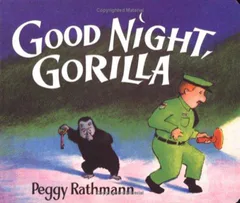 Good Night, GorillaAges 0–4 · 2 min · about 30 wordsFull book page
- Estimated read-aloud time
- about 2 minutes
- Words
- 30approximate
- Sentences per spread
- 1
- Re-read tolerance
- 5/5strong repeat appeal
- Vocabulary
- 1/5plain words
- Ages
- 0–4
Book features repeated refrain · join-in questions
Why it worksThe words and pictures deliberately tell different amounts, rewarding children who track keys, animals, and background action across pages.
Worth knowingIts story is largely visual, so a child who depends on spoken narration may need the adult to scaffold the first readings.
Full book page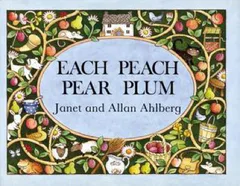 Each Peach Pear PlumAges 0–4 · 3 min · about 130 wordsFull book page
- Estimated read-aloud time
- about 3 minutes
- Words
- 130approximate
- Sentences per spread
- 1
- Re-read tolerance
- 5/5strong repeat appeal
- Vocabulary
- 2/5everyday words
- Ages
- 0–4
Book features rhymes · repeated refrain · join-in questions
Why it worksRhyming clues and linked hidden characters make each spread both a search puzzle and part of a larger nursery-tale world.
Worth knowingMany clues assume familiarity with traditional characters, and the detailed searches can be too demanding for very young listeners.
Full book page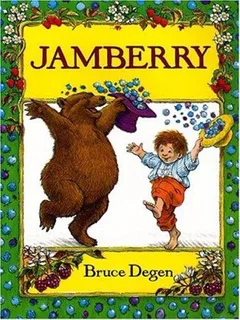 JamberryAges 0–4 · 3 min · about 130 wordsFull book page
- Estimated read-aloud time
- about 3 minutes
- Words
- 130approximate
- Sentences per spread
- 2
- Re-read tolerance
- 5/5strong repeat appeal
- Vocabulary
- 2/5everyday words
- Ages
- 0–4
Book features rhymes · repeated refrain · join-in questions
Why it worksThe berry adventure fuses quick rhyme, invented compounds, and escalating visual fantasy into a strong read-aloud performance.
Worth knowingThe nonsense vocabulary and rapid cadence can be hard to parse for a child who needs concrete, literal language.
Full book page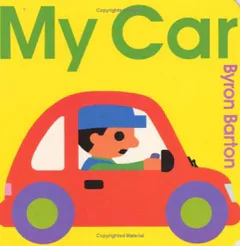 My CarAges 0–4 · 3 min · about 200 wordsFull book page
- Estimated read-aloud time
- about 3 minutes
- Words
- 200approximate
- Sentences per spread
- 1
- Re-read tolerance
- 4/5good repeat appeal
- Vocabulary
- 2/5everyday words
- Ages
- 0–4
Book features repeated refrain
Why it worksA named driver, labeled car functions, and a road journey combine basic mechanical explanation with a small narrative reveal.
Worth knowingIts simplified account is introductory rather than technically complete, and the explanatory pace may feel dry to children seeking action.
Full book page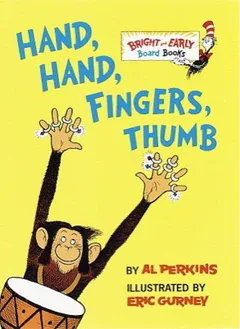 Hand, Hand, Fingers, ThumbAges 0–4 · 3.5 min · about 200 wordsFull book page
- Estimated read-aloud time
- about 3.5 minutes
- Words
- 200approximate
- Sentences per spread
- 2
- Re-read tolerance
- 5/5strong repeat appeal
- Vocabulary
- 1/5plain words
- Ages
- 0–4
Book features rhymes · repeated refrain · join-in questions
Why it worksAn accumulating monkey band and a memorable nonsense refrain turn three body-part words into a sustained rhythm exercise.
Worth knowingThe driving beat can become noisy, and readers looking for a plot or broader body vocabulary will find little of either.
Full book page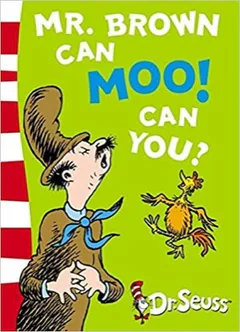 Mr. Brown Can Moo! Can You?Ages 0–4 · 3.5 min · about 200 wordsFull book page
- Estimated read-aloud time
- about 3.5 minutes
- Words
- 200approximate
- Sentences per spread
- 2
- Re-read tolerance
- 5/5strong repeat appeal
- Vocabulary
- 2/5everyday words
- Ages
- 0–4
Book features rhymes · repeated refrain · join-in questions
Why it worksVaried environmental noises and visible sound words invite active imitation while showing that print can represent what we hear.
Worth knowingThere is little story, and performing every sound at full volume can be tiring or overstimulating.
Full book page Papa, Please Get the Moon for MeAges 0–4 · 3.5 min · about 230 wordsFull book page
- Estimated read-aloud time
- about 3.5 minutes
- Words
- 230approximate
- Sentences per spread
- 2
- Re-read tolerance
- 4/5good repeat appeal
- Vocabulary
- 3/5a few new words
- Ages
- 0–4
Why it worksMonica’s request sends Papa up a foldout ladder to a moon too large to carry; he waits until it wanes, and the moon later grows again. Expanding pages make size and cyclical change physical.
Worth knowingThe fantasy of taking down the moon introduces phases but does not explain their cause. Moving and foldout parts are edition-dependent and vulnerable in used copies.
Full book page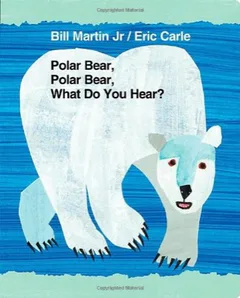 Polar Bear, Polar Bear, What Do You Hear?Ages 0–4 · 3.5 min · about 200 wordsFull book page
- Estimated read-aloud time
- about 3.5 minutes
- Words
- 200approximate
- Sentences per spread
- 1
- Re-read tolerance
- 5/5strong repeat appeal
- Vocabulary
- 3/5a few new words
- Ages
- 0–4
Book features repeated refrain · join-in questions
Why it worksZoo animals answer a repeated listening question with verbs for roaring, fluting, snorting and other sounds, then children imitate them for the zookeeper. The pattern joins animal identity to auditory language.
Worth knowingMany named sounds are represented by unusual verbs rather than familiar onomatopoeia. The zoo sequence supports participation but does not describe natural habitats or typical behavior.
Full book page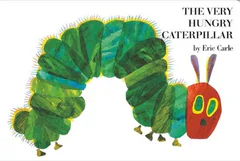 The Very Hungry CaterpillarAges 2–4 · 4 min · 221 wordsFull book page
- Estimated read-aloud time
- about 4 minutes
- Words
- 221
- Sentences per spread
- 1
- Re-read tolerance
- 5/5strong repeat appeal
- Vocabulary
- 2/5everyday words
- Ages
- 2–4
Book features repeated refrain · join-in questions
Why it worksFive weekday spreads add one fruit at a time and one new hole to count; Saturday breaks that measured pattern with ten named foods before Sunday returns to one leaf. The holes, page sizes, days and quantities all carry information rather than serving as decoration.
Worth knowingThe food sequence is a stylized route to metamorphosis, not a factual account of caterpillar feeding or a complete life-cycle explanation. Brown Bear, Brown Bear, What Do You See? is the closer choice when the main task is repeating a fixed spoken pattern rather than tracking change across a week.
Full book page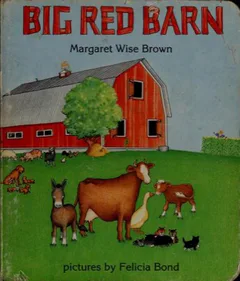 Big Red BarnAges 0–4 · 4.5 min · about 350 wordsFull book page
- Estimated read-aloud time
- about 4.5 minutes
- Words
- 350approximate
- Sentences per spread
- 2
- Re-read tolerance
- 4/5good repeat appeal
- Vocabulary
- 2/5everyday words
- Ages
- 0–4
Book features rhymes · repeated refrain
Why it worksA full day-to-night farm sequence gives its rhyming animal observations a coherent setting and calming endpoint.
Worth knowingThe quiet cataloguing pace has little plot tension and may not hold a child seeking flaps, textures, or a strong problem.
Full book page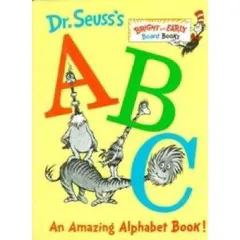 Dr. Seuss's ABCAges 0–4 · 4.5 min · about 330 wordsFull book page
- Estimated read-aloud time
- about 4.5 minutes
- Words
- 330approximate
- Sentences per spread
- 2
- Re-read tolerance
- 4/5good repeat appeal
- Vocabulary
- 2/5everyday words
- Ages
- 0–4
Book features rhymes · repeated refrain · join-in questions
Why it worksAlliterative mini-scenes connect letter forms with repeated initial sounds while rhyme keeps the long alphabet sequence moving.
Worth knowingThe dense nonsense can obscure which words are real, and reading all twenty-six letters at once may overload a beginner.
Full book page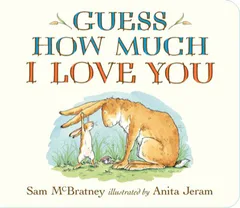 Guess How Much I Love YouAges 2–5 · 5 min · 375 wordsFull book page
- Estimated read-aloud time
- about 5 minutes
- Words
- 375
- Sentences per spread
- 2
- Re-read tolerance
- 3/5holds up
- Vocabulary
- 2/5everyday words
- Ages
- 2–5
Book features repeated refrain · join-in questions
Why it worksLittle Nutbrown Hare tries to measure love through arm span, height, hopping and distance; Big Nutbrown Hare answers in the same units at a larger scale. The repeated comparison turns affection into a physical game a child can imitate.
Worth knowingThe larger hare always wins the contest, which can frustrate a child who hears it as competition. Time for Bed offers mutual caregiving without measurement; this title is better for playful exaggeration and a final bedtime exchange.
Full book page